Hot weather can quickly become dangerous for dogs. Unlike humans, dogs do not sweat efficiently. They regulate body temperature mainly through panting and limited sweat glands in their paws. When temperatures rise above 85°F (29°C), many dogs struggle to cool down effectively. This increases the risk of dehydration, heat exhaustion, and even heatstroke.
Understanding proper dog heat protection tips and dog hydration tips is essential for responsible pet care during summer months. Research from the American Veterinary Medical Association indicates that heatstroke in dogs can begin when body temperature exceeds 104°F (40°C). Without immediate cooling and veterinary attention, this condition can become life-threatening.
Summer safety for dogs focuses on three priorities: preventing overheating, maintaining hydration, and adjusting daily routines to reduce heat exposure. Simple steps such as limiting midday exercise, providing constant access to fresh water, and ensuring shaded resting areas can significantly reduce heat-related risks.
This guide answers common questions dog owners ask about protecting their pets during hot weather. It provides practical strategies, evidence-based insights, and real-world examples that help keep dogs safe and comfortable throughout the summer season.
Why Are Dogs More Vulnerable to Heat Than Humans?
Short answer: Dogs cannot sweat like humans and rely mainly on panting to cool themselves, making them more susceptible to overheating.
Humans regulate body temperature primarily through sweating. Dogs, however, have very limited sweat glands located mostly in their paw pads. Their main cooling method is panting, which releases heat through moisture evaporation from the tongue and respiratory tract.
This system works in mild temperatures but becomes inefficient during extreme heat or humidity. When air temperature rises close to a dog’s body temperature (around 101–102.5°F), panting becomes less effective.
Factors That Increase Heat Risk in Dogs
- Brachycephalic breeds (Bulldogs, Pugs, Boxers)
- Thick or double-coated breeds
- Overweight dogs
- Puppies and senior dogs
- Dogs with heart or respiratory conditions
A veterinary case review published in the journal Scientific Reports (2020) analyzed over 900 heat-related illnesses in dogs. The study found that brachycephalic breeds had over twice the risk of heatstroke compared to other dogs.
Recognizing these vulnerabilities helps owners apply effective dog heat protection tips before temperatures become dangerous.
What Are the Best Dog Heat Protection Tips for Summer?
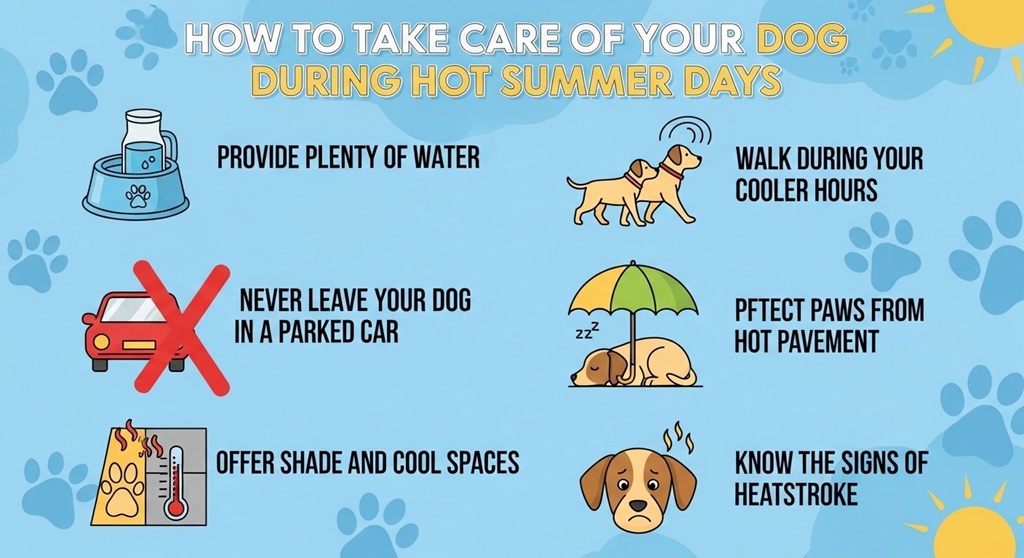
Short answer: Limit heat exposure, provide shade, adjust exercise times, and monitor dogs closely during warm weather.
Preventing overheating is the first step in summer dog care. Many heat-related emergencies occur because owners underestimate how quickly a dog can overheat.
Essential Heat Protection Strategies
- Walk dogs early morning or late evening
- Provide shaded outdoor areas
- Use cooling mats or elevated dog beds
- Avoid hot pavement
- Never leave dogs inside parked vehicles
Even when outside temperatures are around 75°F (24°C), the interior of a parked car can exceed 100°F (38°C) within 20 minutes. The American Veterinary Medical Association reports that many heatstroke cases occur inside vehicles.
Pavement Temperature Check
| Air Temperature | Approximate Pavement Temperature | Risk Level |
|---|---|---|
| 77°F (25°C) | 125°F (52°C) | Can burn paws |
| 86°F (30°C) | 135°F (57°C) | High burn risk |
| 95°F (35°C) | 149°F (65°C) | Severe burn risk |
A simple rule: if you cannot hold your hand on the pavement for 7 seconds, it is too hot for your dog’s paws.
How Can You Keep Your Dog Properly Hydrated in Summer?
Short answer: Provide constant access to fresh water, encourage drinking, and include moisture-rich foods in the diet.
Hydration plays a major role in preventing overheating. Water helps regulate body temperature and supports normal organ function during hot weather.
Veterinarians often recommend that dogs drink roughly one ounce of water per pound of body weight daily. During summer months, this requirement may increase due to heat and activity levels.
Practical Dog Hydration Tips
- Keep multiple water bowls around the house
- Carry portable water during walks
- Add ice cubes to water bowls
- Offer wet food occasionally
- Provide electrolyte solutions recommended by veterinarians
Some owners also use frozen treats made from diluted chicken broth or plain yogurt. These provide hydration while helping dogs cool down.
Proper dog hydration tips reduce the risk of dehydration symptoms such as dry gums, lethargy, and excessive panting.
What Are the Warning Signs of Heatstroke in Dogs?
Short answer: Excessive panting, drooling, vomiting, weakness, and collapse are common warning signs of heatstroke.
Heatstroke occurs when a dog’s internal temperature rises above 104°F. Immediate intervention is critical.
Early Symptoms
- Heavy panting
- Excessive drooling
- Bright red gums
- Restlessness
Advanced Symptoms
- Vomiting
- Diarrhea
- Loss of coordination
- Seizures
- Collapse
If heatstroke is suspected, move the dog to a cool shaded area immediately and begin cooling with room-temperature water. Avoid ice-cold water, as it can cause shock. Contact a veterinarian as soon as possible.
How Should Exercise Routines Change During Hot Weather?
Short answer: Exercise dogs during cooler hours and reduce intensity during heat waves.
Many dogs remain energetic in summer, but high temperatures can make exercise dangerous. Adjusting routines helps prevent overheating while maintaining physical activity.
Recommended Summer Exercise Schedule
- Morning walks before 9 AM
- Evening walks after sunset
- Shorter play sessions
- Indoor enrichment activities
Indoor games such as puzzle toys, scent games, and training sessions provide mental stimulation without heat exposure.
These adjustments are part of responsible dog heat protection tips recommended by veterinary professionals.
What Cooling Products Can Help Dogs Stay Comfortable?
Short answer: Cooling mats, cooling vests, and shaded outdoor shelters can help regulate a dog’s body temperature.
Modern pet care products offer additional support during extreme heat.
Popular Cooling Options
- Gel-based cooling mats
- Cooling bandanas
- Evaporative cooling vests
- Portable shade tents
- Dog pools
While these products help reduce heat stress, they should supplement—not replace—basic summer safety practices such as hydration and shade.
What Can We Learn From Real Heatstroke Cases in Dogs?
A veterinary hospital case review from the United Kingdom evaluated 905 dogs treated for heat-related illness. The study identified three common triggers:
- Exercise during hot weather (74%)
- Confinement in hot environments (12%)
- Vehicle-related heat exposure (5%)
The mortality rate in severe heatstroke cases reached approximately 14%. However, dogs that received early cooling and veterinary care had significantly higher survival rates.
This data highlights why preventive dog heat protection tips and proactive dog hydration tips are essential for summer pet safety.
Conclusion: How Can Dog Owners Keep Pets Safe All Summer?
Summer can be enjoyable for both dogs and owners, but rising temperatures introduce real health risks. Dogs rely on their owners to create a safe environment that prevents overheating and dehydration.
Simple precautions make a significant difference. Provide constant access to fresh water. Schedule walks during cooler hours. Ensure shaded resting areas. Monitor dogs closely for early warning signs of heat stress.
Consistently applying these dog heat protection tips and dog hydration tips helps reduce the risk of heat-related illness while keeping pets comfortable and active.
If you want your dog to stay healthy and energetic during summer, start implementing these strategies today. Share this guide with fellow dog owners and help create safer environments for pets during hot weather.
Frequently Asked Questions About Dog Heat Protection
How hot is too hot for dogs?
Temperatures above 85°F (29°C) can become unsafe for many dogs, especially during physical activity. Humidity increases the risk because it reduces the effectiveness of panting.
How much water should a dog drink during hot weather?
Dogs typically need about one ounce of water per pound of body weight daily. During summer, active dogs may require more to maintain hydration.
Can dogs get sunburn?
Yes. Dogs with light-colored fur or thin coats are especially vulnerable to sunburn, particularly on the nose, ears, and belly. Pet-safe sunscreen can help protect exposed skin.
Is it safe for dogs to swim to cool down?
Swimming can help dogs regulate body temperature, but owners should supervise them closely and ensure the water is clean and safe.
Why should dogs not stay in parked cars during summer?
Vehicle interiors heat up rapidly. Even when outside temperatures are moderate, the inside of a car can reach dangerous levels within minutes, leading to heatstroke.
Do fans help cool dogs?
Fans provide limited cooling because dogs do not sweat like humans. However, fans combined with shade and ventilation can improve comfort.
What breeds are most sensitive to heat?
Brachycephalic breeds such as Bulldogs, Pugs, and Shih Tzus are especially vulnerable because their airway structure limits effective panting.
Read More Also: How to Install a Hitch Bike Rack on Your SUV in Minutes
About Author
