A long round of golf can stretch four to five hours under open skies. The sun beats down, the temperature climbs, and your focus needs to stay sharp from the first tee to the final putt. What you wear on your head during that time matters more than most golfers realize. A breathable golf cap keeps you cool, comfortable, and concentrated throughout every hole. However, not every cap delivers on that promise. This guide will help you choose the right one with confidence.
Why Breathability Should Be Your First Priority
When you think about a golf cap, style might be the first thing that comes to mind. That is completely understandable. However, on a long summer round, breathability quickly becomes far more important than looks.
Heat builds up fast under a poorly ventilated cap. Your scalp has a high concentration of sweat glands, and when heat has nowhere to escape, your body temperature rises. This leads to discomfort, fatigue, and reduced concentration. Therefore, a cap that allows air to flow freely through or around it gives you a genuine performance advantage.
Breathable caps regulate your head temperature passively. You do not need to think about it. The cap simply does its job while you focus on your game. Additionally, good airflow reduces the buildup of sweat and moisture, which means less irritation and a more comfortable experience across all eighteen holes.
The Role of Fabric in Cap Breathability
Fabric is the single most important factor in how breathable a cap will be. Different materials perform very differently in heat, and understanding your options makes the buying decision much easier.
Polyester is the most widely used fabric in performance golf caps. It is lightweight, quick-drying, and resistant to shrinking. Most polyester caps used in golf are woven or knitted in a way that promotes airflow. They feel light on your head and dry quickly after sweating, which is exactly what you want during a long round.
Nylon is another popular choice. It is even lighter than polyester in many cases and has excellent moisture-wicking properties. Nylon caps tend to hold their shape well and resist fading after repeated washing. Therefore, they offer both performance and durability in a single package.
Cotton, on the other hand, is far less suitable for warm-weather golf. Cotton absorbs sweat rather than pulling it away from your skin. A cotton cap becomes damp and heavy as the round progresses. While it may feel soft and natural at first, it quickly becomes uncomfortable under sustained heat. Therefore, save cotton caps for cooler days or casual wear off the course.
Blended fabrics that combine polyester with a small percentage of spandex or elastane are also worth considering. The added stretch makes the cap fit more naturally against your head and allows it to move with you during your swing without shifting out of place.
Mesh Panels: A Simple Feature That Makes a Big Difference
One of the most effective ways a cap improves airflow is through mesh panels. Many performance golf caps feature mesh sections built into the sides or back of the crown. These panels are made from an open-weave material that allows hot air to escape and cool air to enter.
Even a single mesh panel at the back of a cap makes a noticeable difference in ventilation. Caps with multiple mesh panels, sometimes called trucker-style or five-panel caps, provide even greater airflow. However, full mesh caps can sometimes feel less structured than traditional caps, so personal preference plays a role here.
When examining a cap in store or online, look for how much of the crown area is covered by mesh versus solid fabric. More mesh generally means more ventilation. Additionally, check that the mesh is tightly woven enough to keep its shape and durability over time. Flimsy mesh loses its structure quickly and can look worn after just a few washes.
Sweatbands: The Unsung Hero of Cap Comfort
The interior of a golf cap is just as important as the exterior. Most caps include a sweatband sewn around the inner brim. This thin strip of fabric absorbs perspiration and prevents sweat from dripping into your eyes during a round.
Look for sweatbands made from moisture-wicking materials such as polyester terry or microfiber. These fabrics pull moisture away from your forehead and help the cap dry faster between shots. Additionally, a well-constructed sweatband stays soft and comfortable even after many hours of wear.
Some premium caps feature removable or replaceable sweatbands. This is a useful feature because the sweatband is usually the first part of a cap to show wear. Being able to replace it extends the life of the entire cap significantly. Therefore, if you play frequently, this feature is worth paying a little more for.
Getting the Right Fit for Maximum Comfort
A cap that does not fit properly will cause problems regardless of how breathable it is. A loose cap shifts during your swing. A tight cap creates pressure and headaches over a long round. Therefore, fit deserves just as much attention as fabric and ventilation.
Most golf caps come in one of three fit types. Structured caps have a firm inner lining that holds the crown shape even when not being worn. They tend to sit higher on your head and offer a more formal, polished look. Unstructured caps have a softer crown that molds more naturally to the shape of your head, making them a popular choice among golfers who prefer a relaxed fit.
Stretch-fit caps use elastic materials to conform directly to your head circumference. They are available in small, medium, and large size ranges. Adjustable caps, on the other hand, include a strap or buckle at the back that lets you dial in the exact fit. Adjustable styles are a practical choice if you are unsure of your head size or tend to share gear.
To measure your head correctly, wrap a soft measuring tape around your head about one inch above your eyebrows. This gives you your circumference, which you can then match to a brand’s size chart. Never skip this step when buying a cap online.
Lightweight Hats and Their Impact on Performance
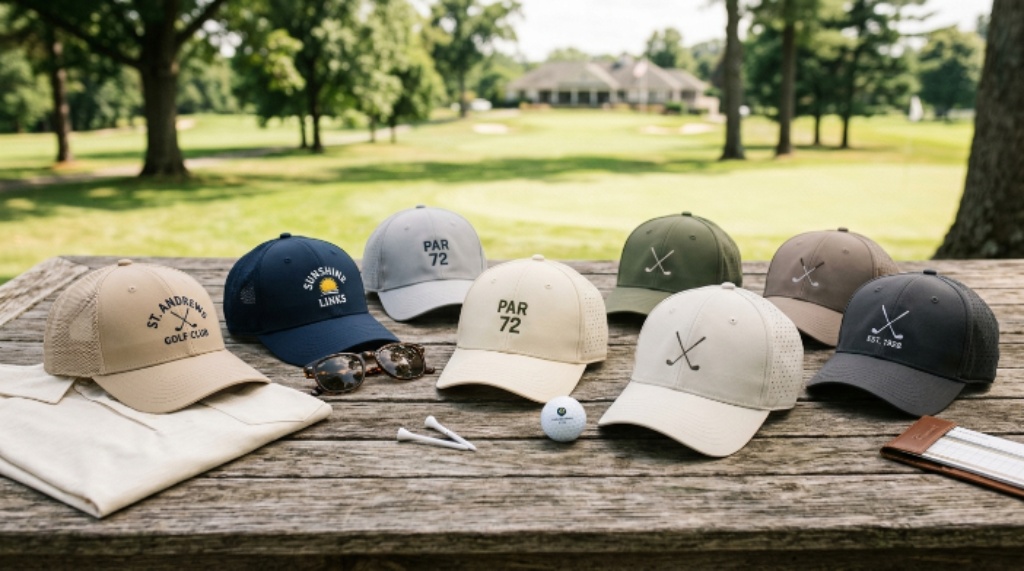
Choosing lightweight hats is one of those decisions that seems small but adds up over an entire round. Every ounce matters when you are wearing something on your head for four or more hours. A cap that weighs even slightly more than necessary creates a subtle but cumulative strain on your neck and shoulders.
Lightweight hats made from high-performance synthetic fabrics typically weigh between 60 and 90 grams. That is noticeably lighter than a standard cotton cap. The difference in feel after several hours is real. Additionally, lighter caps tend to be more packable, which is useful when you need to stuff one into your golf bag between rounds.
How Summer Golf Wear Comes Together
A great cap does not work in isolation. It is one part of a broader approach to dressing well for warm-weather rounds. Your shirt, trousers or shorts, socks, and footwear all contribute to how comfortable you feel. When all your summer golf wear works together, the result is a round where clothing becomes invisible — you simply play without distraction.
Look for caps that coordinate easily with standard golf apparel. Neutral tones like white, grey, navy, and black pair with almost anything. However, if you enjoy more expressive styles, many brands offer vibrant colorways and patterned designs that still perform at a high level. Style and function are not mutually exclusive in modern golf apparel.
Practical Tips for Buying Your Next Golf Cap
Shopping for a breathable golf cap is straightforward once you know what to look for. Keep these practical points in mind before you make your decision:
- Always check for UPF or UV protection ratings, especially for summer play
- Look for at least one mesh panel for ventilation, ideally more
- Choose polyester or nylon over cotton for hot-weather rounds
- Make sure the sweatband is made from moisture-wicking fabric
- Opt for an adjustable or stretch-fit design if you are unsure of your size
- Read customer reviews to learn how the cap performs in real playing conditions
Additionally, do not overlook the brim. A stiff, pre-curved brim is preferable for most golfers because it holds its angle and channels shade toward your eyes consistently throughout the round. A flat brim, while stylish, requires manual shaping and can shift more easily in the wind.
Conclusion
Choosing a breathable golf cap for long rounds comes down to a few straightforward principles. Prioritize performance fabrics like polyester and nylon over cotton. Look for mesh panels, a quality moisture-wicking sweatband, and a fit that stays secure without creating pressure. Lightweight hats reduce fatigue over the course of a full round, and well-chosen summer golf wear ensures that nothing between you and a great score gets in the way.
A golf cap is a small investment with a large impact. When you find the right one, you stop thinking about it entirely — and that is exactly the point. Get the right cap on your head, and let your game do the talking.
Frequently Asked Questions
What is the most breathable material for a golf cap?
Polyester and nylon are the most breathable synthetic materials used in golf caps. They wick moisture away from the skin, dry quickly, and allow air to circulate around the head. Caps with added mesh panels offer even greater ventilation during hot rounds.
Are structured or unstructured golf caps better for long rounds?
Both can work well, but many golfers prefer unstructured caps for long rounds because they sit more naturally on the head and create less pressure over time. However, structured caps hold their shape better and tend to look more polished on the course.
How often should I wash my golf cap?
You should wipe the sweatband down with a damp cloth after every round and hand wash the entire cap every three to five uses. Regular cleaning prevents salt and sweat buildup, which breaks down fabric and causes unpleasant odors over time.
Do golf caps with mesh panels look professional on the course?
Yes. Many major golf brands produce performance caps with mesh panels that look clean and modern. Mesh-back and five-panel styles are widely accepted across all types of courses and skill levels. The perception of mesh caps as casual wear has shifted significantly in recent years.
Should I choose a cap with a UPF rating for summer golf?
Absolutely. A UPF 30 rating blocks around 97 percent of UV radiation, and a UPF 50+ rating blocks over 98 percent. Since golfers spend several hours in direct sunlight per round, a UPF-rated cap provides meaningful protection for your scalp, forehead, and face.
Related Topics:
How to Improve Short Game with the Right Golf Wedges
How to Choose a Skateboard for Beginners: A Complete Guide
About Author
