Taking care of your vehicle doesn’t always require a trip to the mechanic. Many routine maintenance tasks are simple enough for beginners to handle at home. However, you need the right equipment to get started. Building a well-organized toolkit empowers you to tackle basic repairs, save money, and gain confidence in maintaining your car.
Starting with DIY auto repair tools can feel overwhelming when you see the endless options available. The good news is that you don’t need every tool immediately. A carefully selected collection of essential tools will cover most basic maintenance needs. This guide will help you understand exactly what to buy, how to prioritize your purchases, and how to build a kit that grows with your skills.
Understanding Your Maintenance Needs
Before purchasing anything, consider what tasks you’ll actually perform. Most beginners start with simple jobs like oil changes, tire rotations, air filter replacements, and battery maintenance. These common tasks require specific tools that form the foundation of any home garage.
Think about your vehicle type as well. Some cars require metric tools, while others need standard measurements. Modern vehicles typically use metric fasteners, but older American cars often need standard sizes. Research your specific vehicle to avoid buying tools you won’t use.
Additionally, consider your living situation. Apartment dwellers with limited storage need compact, multi-purpose tools. Homeowners with garage space can invest in larger equipment and storage systems. Your budget also plays a role in how quickly you build your collection.
Starting with Hand Tools
Hand tools form the backbone of any automotive toolkit. These items don’t require electricity or air pressure, making them accessible and reliable for beginners.
A socket set is perhaps your most important investment. Look for a set that includes both metric and standard sizes, ranging from 8mm to 19mm for metric and 1/4 inch to 3/4 inch for standard. The set should include a ratchet handle, various socket sizes, and extensions of different lengths. A 3/8-inch drive ratchet handles most automotive work perfectly.
Combination wrenches complement your socket set by accessing fasteners in tight spaces where sockets won’t fit. A set covering the same size range as your sockets ensures you’re prepared for various situations. These wrenches have an open end on one side and a closed loop on the other, giving you flexibility in how you approach each bolt.
Screwdrivers are necessary for countless tasks. Get both flathead and Phillips head screwdrivers in multiple sizes. A set with magnetic tips helps prevent dropped screws in hard-to-reach areas. Consider investing in a ratcheting screwdriver set that includes interchangeable bits for added versatility.
Pliers serve many purposes in automotive work. Needle-nose pliers reach into confined spaces, while standard slip-joint pliers handle general gripping tasks. Locking pliers, often called Vise-Grips, can clamp onto stuck fasteners or hold parts in place while you work. Channel-lock pliers adjust to grip various sizes of nuts, bolts, and hoses.
Specialized Automotive Tools
Some jobs require tools designed specifically for automotive applications. These specialized items make certain tasks possible that would otherwise be extremely difficult or impossible.
An oil filter wrench removes stubborn oil filters during oil changes. Several types exist, including strap wrenches, cap-style wrenches, and three-jaw adjustable wrenches. The adjustable style works with multiple filter sizes, making it ideal for beginners who might work on different vehicles.
A drain pan collects used oil during oil changes. Choose one with a capacity of at least five quarts and a spout for easy pouring into recycling containers. Some models include built-in storage for used filters.
A jack and jack stands are crucial for safely lifting your vehicle. Never rely solely on a jack to support a car while you work underneath. The jack lifts the vehicle, but jack stands provide the stable support needed for safety. Start with a quality floor jack rated for your vehicle’s weight and a pair of jack stands with the same capacity.
Tire pressure gauges help maintain proper inflation, which affects fuel economy, tire wear, and safety. Digital gauges provide the most accurate readings, though quality dial gauges work well too. Keep one in your toolkit and another in your vehicle’s glove compartment.
Measuring and Diagnostic Equipment
Accurate measurements and proper diagnostics prevent guesswork and ensure quality repairs. These tools help you identify problems and verify your work.
A torque wrench tightens fasteners to manufacturer specifications. Over-tightening can strip threads or warp components, while under-tightening allows parts to loosen. A click-type torque wrench covering 10 to 150 foot-pounds handles most automotive applications. Always return the torque wrench to its lowest setting after use to maintain calibration.
A multimeter tests electrical systems, measuring voltage, current, and resistance. This tool helps diagnose battery issues, check alternator output, and troubleshoot electrical problems. Digital multimeters are easier to read than analog versions and often include additional features like continuity testing.
A code reader or scan tool plugs into your vehicle’s diagnostic port to read trouble codes when the check engine light appears. Basic code readers are affordable and help you understand problems before visiting a mechanic. More advanced scan tools provide live data and additional diagnostic capabilities.
Safety Equipment and Supplies
Working on vehicles involves potential hazards. Proper safety equipment protects you from injury and makes the job more comfortable.
Safety glasses shield your eyes from falling debris, splashing fluids, and other hazards. Get a comfortable pair that fits securely and keep them in your toolkit so they’re always available when needed.
Work gloves protect your hands from cuts, burns, and harsh chemicals. Nitrile gloves work well for jobs involving fluids, while mechanic’s gloves with reinforced palms and fingers suit general work. Keep both types on hand.
A shop light or work light illuminates dark areas under the hood or beneath the vehicle. LED lights provide bright, cool illumination without draining batteries quickly. Magnetic or hanging models keep your hands free while working.
A fire extinguisher rated for automotive fires should be easily accessible in your workspace. Automotive fires can involve gasoline, oil, and electrical components, so make sure your extinguisher handles multiple fire types.
Cleaning and Maintenance Supplies
Keeping your workspace and tools clean makes work easier and extends tool life. These supplies help you maintain both your vehicle and your equipment.
Shop towels or rags are essential for cleaning up spills, wiping parts, and general cleanup. Buy them in bulk, as you’ll use them constantly. Microfiber towels work well for delicate surfaces and leave no lint behind.
Brake cleaner removes oil, grease, and brake dust from components. It evaporates quickly without leaving residue, making it invaluable for cleaning parts before inspection or reassembly. Use it in well-ventilated areas.
Penetrating oil like WD-40 or PB Blaster loosens rusted or seized fasteners. Apply it and wait several minutes before attempting to remove stubborn bolts. This patience often prevents rounded bolt heads and broken fasteners.
Hand cleaner formulated for automotive work removes grease and oil from your skin. Look for products that don’t require water, as they’re convenient when working away from a sink. Follow up with a moisturizer to prevent dry, cracked hands.
Organizing Your Tools
A disorganized toolkit wastes time and increases frustration. Proper organization helps you work efficiently and prevents lost tools.
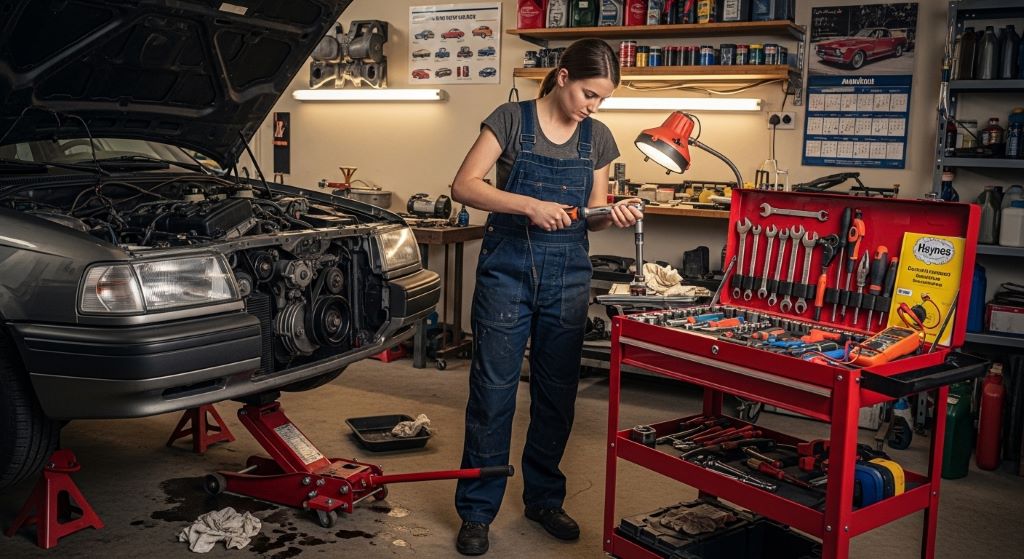
A toolbox or tool chest keeps everything in one place. Rolling tool chests with multiple drawers work well for home garages, while portable toolboxes suit those with limited space. Consider your current collection and leave room for growth.
Tool organizers like socket trays, wrench racks, and drawer dividers keep similar items together. These organizers make it easy to see what you have and quickly find what you need. Shadow foam inserts show exactly where each tool belongs, making it obvious when something is missing.
Label drawers and compartments clearly. This practice helps you maintain organization and allows others to return borrowed tools to the correct location. Take photos of your organized drawers as reference for maintaining the system.
Building Your Kit Gradually
You don’t need to buy everything at once. In fact, building your collection gradually often leads to better decisions and higher quality tools.
Start with the basics needed for your first project. If you’re beginning with oil changes, get a socket set, oil filter wrench, drain pan, jack, and jack stands. Add tools as you expand into new types of maintenance.
Prioritize quality for frequently used items. A good ratchet and common socket sizes deserve investment, as you’ll use them repeatedly. Less common specialty tools can be budget options initially, then upgraded if you use them often.
Watch for sales and combo deals. Hardware stores and tool suppliers regularly offer promotions on tool sets. Black Friday, Father’s Day, and holiday sales often feature significant discounts on quality tools.
Consider borrowing specialized tools for one-time jobs. Auto parts stores often have tool loan programs where you pay a deposit and get it back when you return the tool. This option makes sense for expensive items you rarely need.
Learning to Use Your Tools Properly
Owning tools means nothing without knowing how to use them correctly. Proper technique prevents damage to your vehicle and injuries to yourself.
Watch tutorial videos specific to your vehicle and the task at hand. YouTube offers countless detailed guides from experienced mechanics. Pay attention to tool selection and technique in these videos.
Start with simple projects and gradually increase difficulty. Attempting complex repairs before mastering basics leads to frustration and potentially expensive mistakes. Each successful project builds confidence and skills.
Read your vehicle’s service manual. This book provides specific torque specifications, fluid capacities, and maintenance intervals for your exact model. Following manufacturer guidelines ensures proper repairs.
Ask questions when uncertain. Online forums dedicated to your vehicle model connect you with experienced owners and mechanics. Most enthusiasts enjoy helping beginners learn.
Conclusion
Building a complete car maintenance toolkit doesn’t happen overnight. However, with careful planning and gradual acquisition, you’ll assemble a collection that serves you well for years. Starting with DIY auto repair tools focused on basic maintenance gives you immediate value while building toward more advanced capabilities.
The essential tools outlined in this guide cover most routine maintenance tasks beginners encounter. A quality socket set, wrenches, screwdrivers, and specialized automotive tools form the foundation. Safety equipment protects you while learning, and proper organization keeps everything accessible.
Remember that tools are investments in both your vehicle and your skills. Therefore, prioritize quality for frequently used items and build your collection as your abilities grow. With the right equipment and willingness to learn, you’ll save money on routine maintenance while gaining valuable knowledge about how your vehicle works.
The confidence that comes from successfully maintaining your own car is invaluable. Start small, stay safe, and enjoy the journey of becoming more self-sufficient in automotive care.
Frequently Asked Questions
How much should I budget for a beginner’s car maintenance toolkit?
A basic toolkit covering routine maintenance typically costs between 200 and 400 dollars when buying quality tools. You can start smaller by purchasing only what you need for your first project, then adding tools gradually. Investing in good quality for frequently used items like ratchets and common socket sizes saves money long-term, as they’ll last for decades with proper care.
What’s the difference between metric and standard tools, and which do I need?
Metric tools measure in millimeters while standard tools use inches and fractions. Most modern vehicles, regardless of origin, use metric fasteners. However, older American vehicles often require standard sizes. Check your vehicle’s manual or examine existing fasteners to determine what you need. Many tool sets include both measurement systems, providing flexibility for different vehicles.
Can I use power tools instead of hand tools for automotive work?
Power tools like impact wrenches and electric ratchets are helpful but not necessary for beginners. Hand tools give you better feel and control, which helps prevent over-tightening and stripped fasteners. Additionally, hand tools work anywhere without requiring electricity or air compressors. As you gain experience, you can add power tools to speed up certain tasks.
How do I know if I’m buying quality tools or cheap ones?
Quality tools typically have solid construction with no loose parts or rough edges. They carry warranties, often lifetime guarantees from reputable manufacturers. Cheap tools feel lighter, may have visible casting flaws, and often lack warranties. For beginners, mid-range brands like Husky, Kobalt, or Craftsman offer good quality at reasonable prices. Avoid the absolute cheapest options, as they break easily and can damage fasteners.
Where should I store my tools to keep them in good condition?
Store tools in a dry location away from moisture to prevent rust. A garage or climate-controlled shed works well. Keep them organized in a toolbox or chest with drawers. Wipe tools clean after each use and apply a light coat of oil to metal surfaces if storing for extended periods. Avoid leaving tools on the ground or exposed to weather, as this significantly shortens their lifespan.
Related Topics:
Pros and Cons of Popular Truck Engines: Choosing the Right Power for Your Ride
Oklahoma City Car Insurance Agents: Trusted and Affordable
About Author
