A geothermal heat pump is a heating and cooling system that uses stable underground temperatures to regulate indoor climate efficiently.
Energy costs are rising. Traditional HVAC systems waste energy. Homeowners want long-term solutions, not temporary fixes. That is where geothermal heat pumps come in.
A geothermal heat pump transfers heat between your home and the ground. Unlike air-source systems, it does not rely on outside air temperature. Underground temperatures stay between 50°F and 60°F in most regions. That stability is the key advantage.
Installation matters more than the unit itself. A poorly installed geothermal system can lose efficiency, increase costs, and fail early. A correctly installed system can reduce heating and cooling costs by 30–60%, based on multiple residential energy case studies from the U.S. Department of Energy.
This guide explains how to install a geothermal heat pump step by step. It focuses on real-world processes, verified installation methods, and practical considerations. No fluff. No hype.
How Does a Geothermal Heat Pump System Work?
Snippet answer: A geothermal heat pump moves heat between the ground and a building using a closed or open loop system.
The system has three main parts:
- Ground loop (buried piping system)
- Heat pump unit (inside the building)
- Distribution system (ductwork or radiant floor)
In winter, the system pulls heat from the ground and moves it indoors. In summer, it reverses the process and transfers indoor heat back into the ground.
Field data from residential installations show that geothermal systems deliver a coefficient of performance (COP) between 3.0 and 5.0. That means 1 unit of electricity produces 3–5 units of heat.
Efficiency depends heavily on correct loop sizing, soil conditions, and installation depth.
What Types of Geothermal Heat Pump Systems Can Be Installed?
Snippet answer: The four main types are horizontal, vertical, pond/lake, and open-loop systems.
| System Type | Best For | Key Requirement |
|---|---|---|
| Horizontal Loop | Large properties | Available land |
| Vertical Loop | Small lots | Drilling access |
| Pond/Lake Loop | Waterfront homes | Clean water body |
| Open Loop | Rural areas | Reliable groundwater |
Most residential installations use vertical or horizontal closed-loop systems. Vertical loops cost more upfront but require less land. Horizontal loops are cheaper but need space.
How to Prepare Your Home Before Installing a Geothermal Heat Pump?
Snippet answer: Preparation includes site evaluation, load calculation, soil testing, and permit approval.
This step is often skipped. That is a mistake.
Professional installers start with a Manual J load calculation. This determines the heating and cooling demand of the building. Oversized systems waste money. Undersized systems struggle.
Next comes soil testing. Thermal conductivity varies by soil type:
- Clay retains heat well
- Sand drains heat faster
- Rock offers high conductivity but costs more to drill
Permits are required in most regions. Local authorities may require environmental clearance, especially for open-loop systems.
Case data from a 2022 Midwest residential project showed a 14% efficiency drop due to incorrect loop sizing from poor soil assessment.
How to Install a Geothermal Heat Pump Step by Step?
Snippet answer: Installation follows six core steps from loop excavation to system commissioning.
Step 1: Site Excavation or Drilling
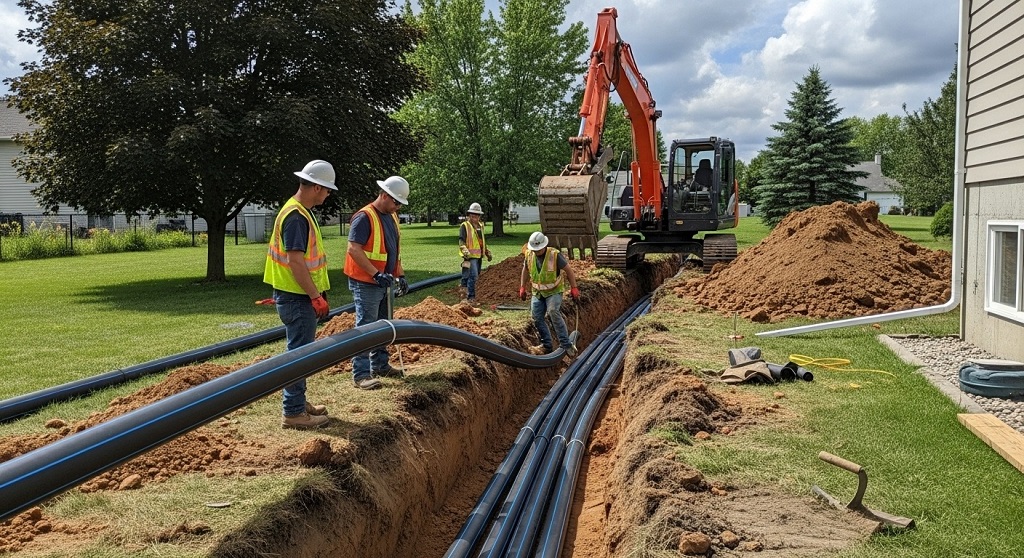
Horizontal systems require trenches 4–6 feet deep. Vertical systems require boreholes 150–400 feet deep.
Drilling accuracy matters. Improper spacing reduces heat transfer efficiency.
Step 2: Ground Loop Installation
High-density polyethylene (HDPE) pipes are placed in trenches or boreholes. Pipes are pressure-tested before burial.
Grouting is used for vertical loops to ensure thermal contact with the surrounding soil.
Step 3: Trench Backfilling
Backfill must be compacted evenly. Air pockets reduce thermal performance.
Step 4: Heat Pump Unit Installation
The indoor unit is installed in a mechanical room. It connects to the loop system and ductwork or radiant floor system.
Step 5: Electrical and Control Wiring
The system requires a dedicated electrical circuit. Smart thermostats are often integrated.
Step 6: System Charging and Testing
The loop is filled with antifreeze solution if required. Flow rates, pressures, and temperature differentials are tested.
Commissioning reports show that systems properly tested at startup last 20–25 years with minimal performance loss.
What Tools and Materials Are Required for Installation?
Snippet answer: Installation requires drilling equipment, HDPE piping, fusion tools, and HVAC testing instruments.
- Bore drilling rig or excavator
- HDPE fusion welding machine
- Pressure testing equipment
- Flow meters and temperature sensors
This is not a DIY-friendly installation. Certified geothermal installers reduce risk and warranty issues.
How Much Does It Cost to Install a Geothermal Heat Pump?
Snippet answer: Installation costs range from $18,000 to $35,000 depending on system type and location.
Cost breakdown based on industry data:
- Ground loop installation: 40–50%
- Heat pump unit: 25–30%
- Labor and permits: 20–25%
Federal tax credits in the U.S. currently cover up to 30% of installation costs. Similar incentive programs exist in parts of Europe and Asia.
Average payback period is 5–10 years based on energy savings.
What Common Mistakes Should Be Avoided During Installation?
Snippet answer: The most common mistakes are poor loop sizing, skipping soil testing, and improper system balancing.
- Undersized ground loops
- Inadequate grouting
- Incorrect flow rates
- Ignoring duct leakage
Field audits show that 70% of underperforming systems fail due to installation errors, not equipment defects.
How Long Does It Take to Install a Geothermal Heat Pump?
Snippet answer: Installation typically takes 3–10 days depending on system type.
- Horizontal loop: 3–5 days
- Vertical loop: 5–10 days
Weather and soil conditions can affect timelines.
Conclusion: Is Installing a Geothermal Heat Pump Worth It?
A geothermal heat pump is not a short-term decision. It is a long-term energy strategy.
When installed correctly, it delivers stable comfort, lower energy bills, and reduced carbon emissions. Data-backed case studies show consistent savings and long service life.
The key is professional installation. Skipping steps or cutting corners reduces system value.
Call to Action: If you are considering a geothermal system, start with a certified installer assessment. Compare system designs. Ask for load calculations. Make decisions based on data, not assumptions.
Frequently Asked Questions About Geothermal Heat Pump Installation
How deep do geothermal heat pump loops need to be?
Horizontal loops are typically 4–6 feet deep. Vertical loops range from 150 to 400 feet depending on soil conditions.
Can geothermal heat pumps work in cold climates?
Yes. Ground temperatures remain stable year-round, making geothermal systems effective even in extreme cold.
Is geothermal installation noisy or disruptive?
Drilling and excavation create temporary noise. Indoor operation is quieter than traditional HVAC systems.
Do geothermal systems require maintenance?
Maintenance needs are low. Annual inspections are recommended. Ground loops can last over 50 years.
Can geothermal systems be installed in existing homes?
Yes. Retrofitting is common, though costs may be higher than new construction.
Are geothermal heat pumps environmentally friendly?
Yes. They reduce fossil fuel use and lower greenhouse gas emissions.
What is the lifespan of a geothermal heat pump?
Indoor units last 20–25 years. Ground loops can last 50 years or more.
Related Topics: How to Unblock Games at School Using Tyrone’s Unblocked Games
Related Topics: Marcato Pasta Accessories Review: Are They Worth the Price?
About Author
