Finding the right seating for your fishing adventures can make the difference between comfortable, productive outings and constant frustration with broken equipment. Many anglers have experienced the disappointment of purchasing a chair that looked sturdy only to have it fail after just a few trips. Understanding what separates truly durable fishing chairs from inferior products helps you make a smart investment.
Quality fishing seating withstands harsh environments, repeated use, and the specific demands of angling activities. Whether you fish from shore, boat, or ice, your chair faces unique challenges that regular outdoor furniture simply isn’t designed to handle. This comprehensive guide will teach you how to identify heavy duty fishing chair options that deliver reliable performance season after season.
By learning to recognize quality construction, materials, and design features, you’ll avoid wasting money on chairs that won’t last. Instead, you’ll invest in seating that provides comfort and reliability for years of fishing adventures.
Understanding What Makes Fishing Chairs Different
Fishing chairs endure conditions that most outdoor furniture never encounters. They sit on wet ground, sandy beaches, rocky shorelines, and boat decks where water constantly splashes. Salt air corrodes metal components, while sun exposure degrades plastics and fabrics. Additionally, anglers move frequently, adjusting position to cast or reel in catches.
Regular lawn chairs or camping seats lack the reinforcement needed for these conditions. They use lighter materials and simpler construction methods because they’re designed for occasional backyard use. However, fishing demands more from your equipment.
The best fishing chairs combine weather-resistant materials with reinforced construction. They’re built to support weight while remaining stable on uneven terrain. Moreover, they incorporate features that make them practical for angling, such as rod holders, storage pockets, and easy portability.
Understanding these fundamental differences helps you recognize when a chair is truly designed for fishing versus simply marketed toward anglers. Therefore, knowing what to look for becomes your first defense against purchasing inferior products.
Frame Construction and Materials
The frame forms the foundation of any durable fishing chair. This structural component determines how much weight the chair can support and how well it resists damage from stress and environmental exposure.
Steel frames offer excellent strength and load capacity. Look for powder-coated or galvanized steel that resists rust and corrosion. Quality manufacturers use thicker gauge steel in stress points like joints and leg connections. The coating should be even and complete, with no bare spots where rust can start.
Aluminum frames provide a lighter alternative while still maintaining good strength. Marine-grade aluminum resists corrosion better than standard aluminum alloys. Check for welded joints rather than crimped or bolted connections, as welding creates stronger bonds that won’t loosen over time.
The frame geometry matters as much as the material. Wide-set legs provide better stability on soft ground or uneven surfaces. Cross-bracing between legs adds rigidity and prevents the frame from flexing under load. Additionally, reinforced corners and joints indicate thoughtful engineering focused on longevity.
Inspect connection points carefully. These areas experience the most stress during use. Quality chairs feature double-riveted joints, welded reinforcements, or thick bolt-through connections. Weak connection points are often the first component to fail on inferior chairs.
Seat and Back Support Systems
The seating surface directly impacts both comfort and durability. Cheap materials sag quickly, stretch out of shape, or tear after minimal use. Quality materials maintain their shape and integrity through years of use.
Canvas and polyester fabrics are common choices for outdoor fishing seat construction. Look for fabrics with a high denier rating, which indicates thread thickness. Fabrics rated 600 denier or higher resist tearing and abrasion better than lighter materials. Double-stitched seams with reinforced stress points prevent separation.
Mesh materials offer excellent breathability and quick drying properties. Quality mesh uses thick, tightly woven strands that support weight without stretching. Poor mesh becomes saggy and uncomfortable quickly. Test the mesh by pressing firmly against it. It should feel taut and supportive, not loose or stretchy.
Padding adds comfort but can also trap moisture and deteriorate. Closed-cell foam resists water absorption and maintains its shape better than open-cell alternatives. Look for removable, washable cushions that allow you to dry the chair frame completely.
The attachment method connecting fabric to frame is crucial. Hook-and-loop fasteners allow easy replacement but may wear out. Sewn-in connections are permanent but more durable. The best designs use multiple attachment points that distribute tension evenly across the fabric.
Weight Capacity and Load Testing
Manufacturers often overstate weight capacities, listing theoretical maximums rather than practical working limits. Understanding how to evaluate true load capacity helps you select appropriately sized seating.
Static weight capacity refers to how much weight the chair can support when someone sits still. Dynamic capacity accounts for movement, which significantly increases stress on the frame and joints. A chair rated for 300 pounds static load might only safely handle 200 pounds with normal fishing movements.
Look for chairs that exceed your weight by at least 100 pounds. This safety margin ensures the chair handles the dynamic forces of fishing without stress. Additionally, it accounts for the extra weight of gear, wet clothing, and the occasional heavier catch you might set on the chair.
Quality manufacturers provide specific weight ratings and often explain their testing methods. They conduct real-world testing rather than relying solely on calculations. Be skeptical of chairs that list unusually high capacities without supporting documentation or that have thin frames and lightweight construction.
Test the chair yourself if possible. Sit in it and shift your weight side to side. The frame shouldn’t flex noticeably or make creaking sounds. Joints should remain tight with no visible movement or separation.
Weather Resistance and Material Treatment
Fishing chairs face constant exposure to moisture, UV radiation, temperature extremes, and often salt water. Materials and treatments that protect against these elements separate durable chairs from those that deteriorate quickly.
UV-resistant materials maintain their integrity despite constant sun exposure. Untreated plastics become brittle and crack. Fabrics fade and weaken. Look for specifically UV-rated components and fade-resistant fabrics. Quality manufacturers treat their materials during manufacturing rather than applying coatings afterward.
Water resistance prevents mold, mildew, and material deterioration. Fabrics should shed water rather than absorbing it. Metal components need protective coatings or inherent corrosion resistance. Check drain holes in plastic components that could trap water.
Temperature stability matters more than many anglers realize. Some plastics crack in cold weather or become soft in heat. Quality materials maintain their properties across a wide temperature range. This becomes especially important if you fish year-round or in extreme climates.
Salt water creates the most challenging environment for fishing equipment. If you fish coastal areas, prioritize marine-grade materials and stainless steel hardware. Rinse your chair with fresh water after each use to remove salt deposits that accelerate corrosion.
Portability Features Without Sacrificing Strength
A durable fishing chair needs to be portable enough to transport easily while remaining robust enough to withstand regular use. This balance requires thoughtful design and quality materials.
Folding mechanisms are common failure points. Look for designs that use thick pins or bolts rather than thin metal rods. The folding action should feel smooth and secure, locking firmly in both open and closed positions. Avoid chairs with loose or wobbly folding points.
Carrying handles or straps should be reinforced where they attach to the frame. Weak attachments tear away after limited use. Quality chairs integrate carrying features into the frame design rather than adding them as afterthoughts.
Weight matters for portability, but extremely lightweight chairs usually sacrifice durability. A heavy duty fishing chair typically weighs more than budget alternatives because it uses thicker materials and more substantial construction. Find a balance that you can comfortably carry to your fishing spots without being so light that it’s fragile.
Carrying cases or bags protect your chair during transport and storage. However, the chair itself should be durable enough that a case isn’t required. Think of protective storage as a bonus rather than a necessity.
Leg Design and Ground Contact
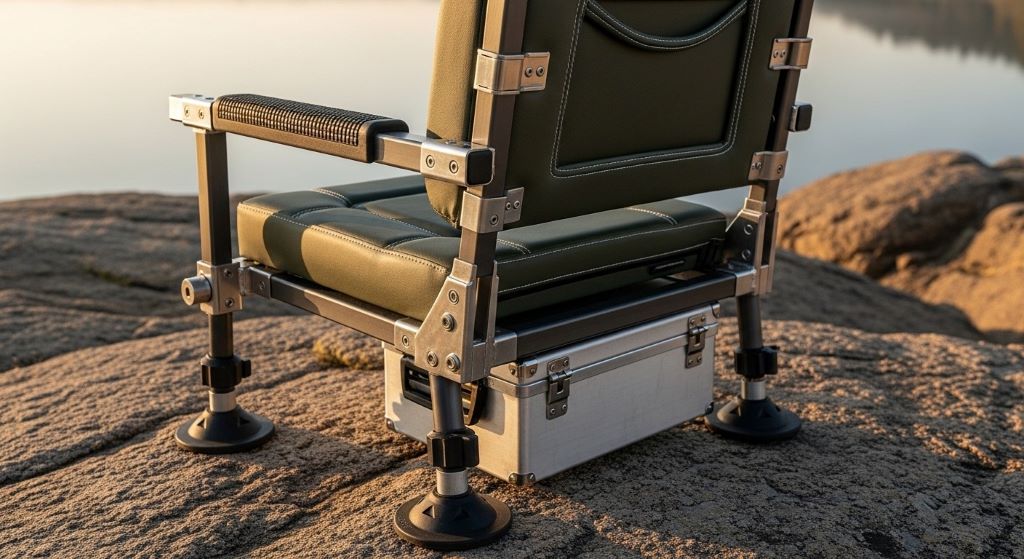
The legs determine how well your chair performs on various surfaces. Fishing happens on sand, mud, gravel, grass, ice, and boat decks. Your seating needs to remain stable across all these conditions.
Wide feet distribute weight over a larger area, preventing the chair from sinking into soft ground. Look for large, flat contact points rather than narrow tubes. Some chairs include removable mud feet that increase surface area for especially soft conditions.
Adjustable legs allow you to level the chair on uneven terrain. Individual leg adjustment works better than linked systems because you can fine-tune each corner independently. The adjustment mechanism should lock firmly and resist movement even when you shift your weight.
Rubber or plastic caps on leg ends protect both the chair and the surface beneath it. They prevent scratching on boat decks and reduce noise when moving the chair. These caps should fit securely and be replaceable when they wear out.
Swivel or rotating features add convenience but introduce potential failure points. If you want a swivel chair, ensure the rotating mechanism uses quality bearings and a robust attachment system. Cheap swivels develop play and become loose quickly.
Practical Features That Enhance Longevity
Certain design features not only improve functionality but also contribute to a chair’s lifespan by reducing wear and providing versatility.
Built-in rod holders keep your equipment secure and prevent you from setting rods on the ground where they could be stepped on or damaged. However, these holders should be positioned so they don’t interfere with the chair’s structural integrity. Look for reinforced mounting points.
Storage pouches and pockets are convenient but check how they’re attached. Sewn-on pockets with reinforced stitching last longer than those attached with weak adhesives or rivets. Mesh pockets drain water better than solid fabric pouches.
Armrests provide comfort and help you get in and out of the chair easily. They should be firmly attached and positioned at a comfortable height. Padded armrests are nice but ensure the padding is waterproof and securely attached.
Side tables or drink holders add functionality. These features work best when integrated into the frame design rather than clipped on afterward. Stability is key; wobbly attachments break quickly and create frustration.
Tool loops or attachment points let you customize your chair with additional accessories. These features should be reinforced and positioned logically for the items you’ll attach.
Brand Reputation and Warranty Coverage
The manufacturer behind your fishing chair significantly impacts its quality and longevity. Established brands with good reputations have more to lose by producing inferior products.
Research customer reviews focusing on long-term durability rather than initial impressions. Look for feedback from users who have owned their chairs for multiple seasons. Pay attention to common failure points mentioned across multiple reviews.
Warranty coverage indicates manufacturer confidence in their product. Longer warranties typically correlate with better quality. However, read the warranty terms carefully. Some cover only manufacturing defects, not normal wear and tear.
Customer service matters when issues arise. Companies that stand behind their products make warranty claims easy and respond quickly to customer concerns. Therefore, consider the total ownership experience rather than just the initial purchase price.
Avoid brands that appear only to sell cheap imports with no ongoing support. These companies often disappear when customers need help. Stick with manufacturers who have been in business for years and have established distribution channels.
Price Versus Value Assessment
Cost doesn’t always indicate quality, but extremely cheap fishing chairs rarely deliver long-term durability. Understanding the relationship between price and value helps you make smart purchasing decisions.
Budget chairs under forty dollars typically use the minimum materials necessary to function. They might work adequately for occasional use but won’t withstand regular fishing trips. Consider these disposable items rather than investments.
Mid-range options between fifty and one hundred fifty dollars often provide the best value for regular anglers. They use quality materials and construction methods without the premium pricing of top-tier brands. Many outdoor fishing seat options in this range will serve you well for years.
Premium chairs above one hundred fifty dollars target serious anglers who fish frequently or professionally. These chairs incorporate the best materials, most thoughtful designs, and often specialized features. The extra cost buys superior durability and often better warranties.
Calculate cost per use rather than just looking at the sticker price. A chair that costs twice as much but lasts five times longer represents better value. Additionally, factor in the frustration and inconvenience of dealing with failed equipment during fishing trips.
Assembly and Maintenance Requirements
How a chair goes together and what maintenance it needs affects its long-term performance and your satisfaction with the purchase.
Pre-assembled chairs eliminate potential assembly errors but may cost more or be harder to transport. Chairs requiring assembly should come with clear instructions and all necessary hardware. Quality chairs use standard tools for assembly rather than requiring specialized equipment.
Connection hardware should be oversized for the application. Thick bolts with washers and lock nuts prevent loosening from vibration and movement. Cheap chairs use undersized hardware that loosens quickly or strips easily.
Maintenance requirements should be minimal but clearly explained. Most quality fishing chairs need only periodic rinsing, basic cleaning, and occasional hardware tightening. Chairs requiring frequent maintenance or special care products become burdensome over time.
Replacement parts availability extends a chair’s useful life significantly. Companies that sell replacement feet, fabric panels, or hardware demonstrate commitment to product longevity. Being able to replace worn components rather than the entire chair saves money and reduces waste.
Storage Considerations
How you store your fishing chair between trips directly impacts its lifespan. Even the most durable chair deteriorates faster when stored improperly.
Keep chairs clean and dry before storage. Dirt and moisture trapped in fabric or joints accelerate wear and corrosion. A quick rinse with fresh water and complete drying takes minimal time but prevents significant damage.
Store chairs in protected locations when possible. Garages, sheds, or covered patios shield equipment from direct sun and rain. If you must store chairs outside, use protective covers designed for outdoor furniture.
Avoid storing chairs under heavy items that could bend or break components. Stacking multiple chairs requires ensuring they’re designed to nest together. Otherwise, store them side by side or hanging from hooks.
Periodic inspection during storage lets you catch problems early. Check for rust development, fabric tears, or loose joints. Addressing issues immediately prevents them from worsening and potentially ruining the chair.
Making Your Final Decision
After considering all these factors, making your final choice involves balancing your specific needs against available options and your budget.
List your must-have features versus nice-to-have extras. This clarity helps you focus on chairs that meet your core requirements without paying for unnecessary additions. Additionally, it prevents you from being swayed by flashy features that don’t add real value.
Compare multiple chairs that meet your criteria. Create a simple spreadsheet noting key specifications like weight capacity, materials, warranty, and price. This organized approach makes differences clear and helps justify spending more for better quality.
Read detailed reviews from multiple sources. Professional reviews provide technical insights, while customer reviews reveal real-world performance. Look for consistent themes across multiple reviews rather than focusing on individual opinions.
Buy from retailers with good return policies when possible. This safety net lets you test the chair and return it if it doesn’t meet expectations. However, be honest in your evaluation; testing doesn’t mean using the chair for a full season.
Conclusion
Identifying durable fishing chairs requires looking beyond attractive prices and marketing claims. Focus on construction quality, material selection, and design features that indicate serious engineering. A heavy duty fishing chair uses substantial frames, weather-resistant materials, and reinforced connection points that withstand harsh conditions and regular use.
Pay attention to weight capacity, not just the stated rating but the actual construction that supports it. Choose outdoor fishing seat options with proven weather resistance and quality finishes that protect against moisture and UV exposure. Additionally, consider practical features that enhance functionality without compromising structural integrity.
Brand reputation and warranty coverage provide valuable insights into product quality. Companies that stand behind their products with comprehensive warranties and responsive customer service demonstrate confidence in their manufacturing. Therefore, these factors should influence your decision alongside physical features.
Remember that the lowest-priced option rarely provides the best value. A moderately priced chair from a reputable manufacturer typically delivers better long-term performance than the cheapest alternative. By investing in quality construction and materials, you’ll enjoy comfortable, reliable seating for many seasons of fishing adventures ahead.
Frequently Asked Questions
How much weight should a fishing chair realistically support?
A quality fishing chair should support at least 250 to 300 pounds for most users. This capacity provides a safety margin above your body weight to account for movement, wet gear, and dynamic forces during fishing activities. Choose chairs rated significantly above your weight; a 200-pound person should select a chair rated for at least 300 pounds to ensure longevity and safety during regular use.
What type of frame material lasts longest in saltwater environments?
Marine-grade aluminum or powder-coated stainless steel frames offer the best corrosion resistance for saltwater fishing. Aluminum resists rust naturally, while quality stainless steel withstands salt exposure well. Powder-coated steel works if you rinse the chair with fresh water after each saltwater use. Avoid plain steel or cheap aluminum alloys that corrode quickly in marine environments. Always check that all hardware uses corrosion-resistant materials as well.
How can I tell if a fishing chair is genuinely heavy duty or just marketed that way?
Examine the frame thickness and joint construction closely. Heavy duty chairs use thick-walled tubing, reinforced joints with welding or multiple fasteners, and substantial hardware. Check the fabric denier rating; quality chairs use 600 denier or higher. Additionally, research the weight capacity and compare it to the chair’s construction. If specifications seem too good for the visible construction quality, the chair probably won’t perform as advertised.
Should I choose a folding or non-folding fishing chair?
Folding chairs offer superior portability and storage convenience, making them ideal if you walk to fishing spots or have limited storage space. However, non-folding chairs typically provide better durability because they lack hinges and folding mechanisms that can fail. Consider your priorities: if you fish from one location consistently, a non-folding chair may serve you better. For anglers who move frequently or fish various locations, a quality folding design is worth the minor durability tradeoff.
How often should I replace my fishing chair?
Replace your fishing chair when structural damage, excessive wear, or safety concerns develop. With proper care, quality chairs last five to ten years or longer. Signs you need replacement include: frame cracks or bends, rust that compromises structural integrity, torn fabric that can’t be repaired, or joints that remain loose despite tightening. If the chair no longer feels stable or safe, replace it immediately regardless of age.
Related Topics:
Remote But Worth It: Off-the-Grid Fishing Trips for the Brave Angler
Fly Fishing in Colorado: Techniques for Local Rivers
About Author
