Imagine walking into a meeting room, ready to present a critical report to your team. The slides are prepared. The data is clear. But once the projector turns on, the screen looks dim and washed out. People squint. Someone asks to turn off the lights. The momentum of your presentation drops instantly.
This problem happens more often than businesses expect. In most cases, the issue is not the projector brand or resolution. The real issue is brightness. Specifically, the number of lumens for an office projector.
Lumens measure how bright a projector can display images. The higher the lumens, the brighter the projection. In office environments where lights are often on, brightness becomes critical for visibility, clarity, and engagement.
Choosing the right lumen level is not guesswork. It depends on factors like room size, lighting conditions, screen size, and the purpose of the presentation.
This guide explains exactly how many lumens you need for an office projector, backed by real usage scenarios and case-based insights. Whether you’re equipping a small meeting room or a large conference hall, understanding projector brightness will help you choose the right device and avoid costly mistakes.
What Are Lumens in a Projector?
Short answer: Lumens measure the brightness of a projector’s light output. Higher lumens mean a brighter image that remains visible even in well-lit rooms.
When businesses search for a bright projector for meeting room environments, the first specification they should check is lumen output. Projector brightness is usually measured in ANSI lumens, which is the standardized method used by manufacturers.
Here is how brightness levels generally translate into real-world performance:
- 1,000–2,000 lumens: Suitable for dark rooms or home use.
- 2,500–3,000 lumens: Works in small rooms with minimal lighting.
- 3,000–4,000 lumens: Ideal for standard office meeting rooms.
- 4,000–6,000 lumens: Best for large meeting rooms or conference spaces.
- 6,000+ lumens: Used in auditoriums or large corporate presentations.
The reason brightness matters is simple. Office environments rarely operate in complete darkness. Lights are often on so participants can take notes or interact during the meeting.
Without enough brightness, charts and text appear dull, reducing the effectiveness of your presentation.
How Many Lumens Do You Need for an Office Projector?
Short answer: Most offices need a projector between 3,000 and 4,000 lumens. This brightness works well in meeting rooms with moderate lighting.
However, the exact requirement depends on the room size and lighting conditions. Below is a general guideline.
| Room Type | Recommended Lumens | Typical Use Case |
|---|---|---|
| Small Meeting Room (3–5 people) | 2,500–3,000 lumens | Team discussions, internal presentations |
| Medium Meeting Room (6–10 people) | 3,000–4,000 lumens | Client presentations, training sessions |
| Large Conference Room | 4,000–5,000 lumens | Company meetings, workshops |
| Auditorium / Training Hall | 5,000–7,000 lumens | Large corporate events |
Most modern offices fall into the medium category. That is why 3,500 lumens is often considered the safe standard for a bright projector in a meeting room.
Why Does Office Lighting Affect Projector Lumens?
Short answer: The brighter the room, the more lumens you need to maintain image clarity.
Office lighting directly competes with the projected image. When ambient light hits the screen, it reduces contrast and makes colors appear faded.
Consider two different meeting environments:
- A dark training room with controlled lighting
- An open meeting room with windows and overhead lights
Both rooms use the same projector. In the dark room, the image appears sharp. In the bright room, the image looks washed out.
Industry research from AV integrators shows that rooms with moderate ambient lighting require roughly 30–40% more brightness compared to dark environments.
This is why many companies choose a bright projector for meeting room presentations instead of relying on lower-lumen models.
What Happens If a Projector Does Not Have Enough Lumens?
Short answer: Low lumen output causes dim images, reduced readability, and poor presentation engagement.
This problem appears frequently in offices that purchase budget projectors designed for home entertainment.
Common issues include:
- Text becomes difficult to read.
- Charts lose contrast.
- Colors appear dull.
- Participants struggle to see details.
According to meeting productivity studies from workplace technology firms, visual clarity plays a major role in engagement during presentations.
If participants cannot clearly see the screen, information retention drops significantly.
In practical terms, insufficient lumens reduce the impact of your presentation even if the content is excellent.
How Screen Size Affects Projector Brightness
Short answer: Larger screens require higher lumen output to maintain brightness.
The light from a projector spreads across the screen. The larger the screen, the more the light spreads out.
This means brightness decreases as screen size increases.
For example:
| Screen Size | Recommended Lumens |
|---|---|
| 80 inches | 2,500–3,000 lumens |
| 100 inches | 3,000–3,500 lumens |
| 120 inches | 3,500–4,500 lumens |
| 150 inches | 5,000+ lumens |
Many corporate meeting rooms use screens between 100 and 120 inches. That is another reason the industry standard sits around 3,500–4,000 lumens for office projectors.
Are Laser Projectors Brighter Than Lamp Projectors?
Short answer: Laser projectors often deliver consistent brightness for longer periods compared to traditional lamp projectors.
Traditional lamp-based projectors gradually lose brightness as the lamp ages. After several thousand hours of use, brightness may drop significantly.
Laser projectors use solid-state light sources. These systems maintain stable brightness over longer periods and typically last 20,000 hours or more.
Because of this reliability, many companies now choose laser models for conference rooms and training environments.
However, the lumen rating still matters. A laser projector with 3,000 lumens is not brighter than a lamp projector with 4,000 lumens.
What Is the Best Lumen Range for a Bright Meeting Room Projector?
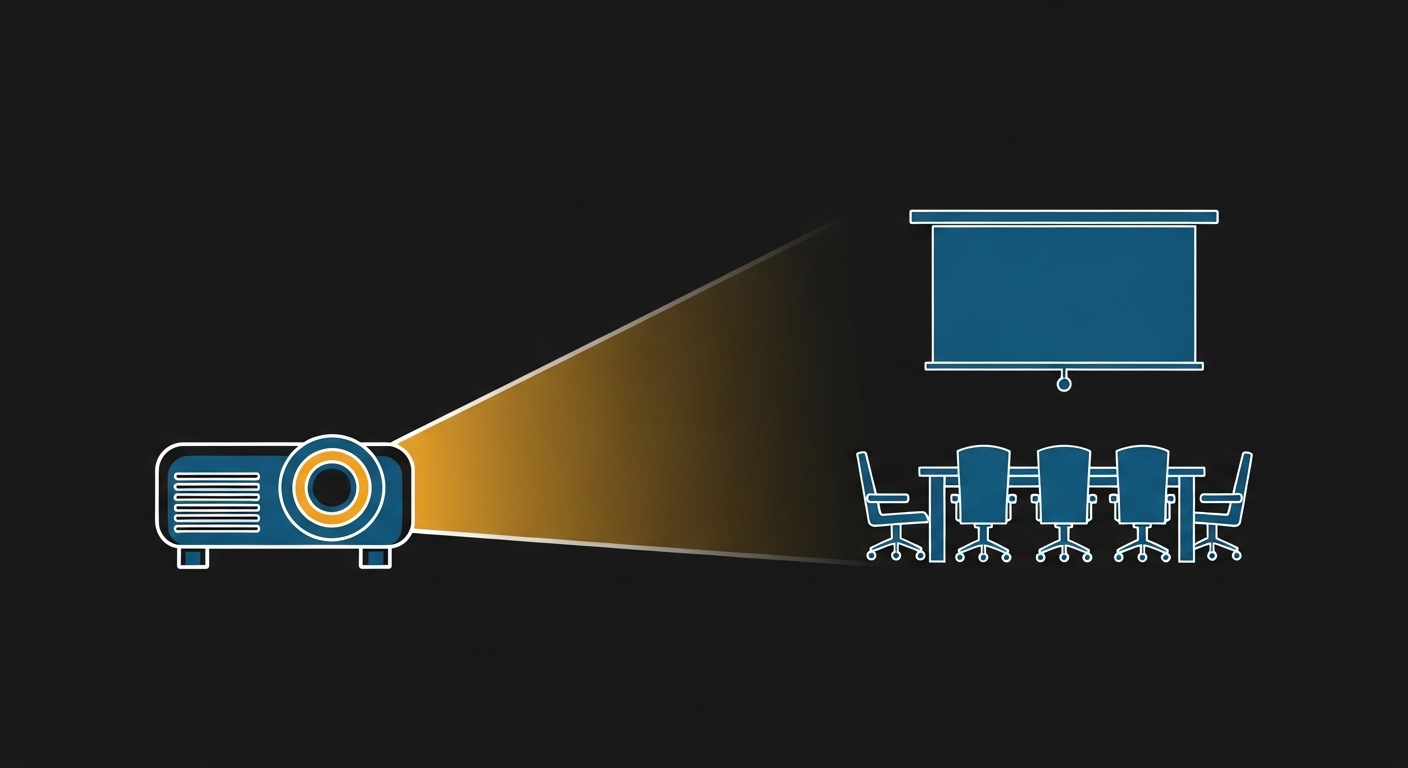
Short answer: The best lumen range for most offices is 3,000 to 4,500 lumens.
This range balances brightness, cost, and performance.
Here is why this range works well:
- Clear text and graphics
- Good visibility with lights on
- Suitable for 100–120 inch screens
- Effective for presentations and video content
Many leading office projector models from major brands fall directly within this brightness range.
Case Study: How One Company Improved Meeting Visibility
Short answer: Upgrading to a higher-lumen projector can significantly improve presentation clarity.
A mid-sized consulting firm upgraded its meeting room projector after employees complained about visibility during presentations.
The original device produced 2,200 lumens. It worked well when lights were off but struggled in normal working conditions.
The company replaced it with a 4,000-lumen office projector.
Results reported by the IT department included:
- Improved readability of financial charts
- Better visibility in daylight conditions
- Reduced need to dim lights during meetings
- More effective client presentations
This upgrade highlights a common mistake. Many businesses underestimate the importance of projector brightness.
Should You Choose More Lumens Than You Need?
Short answer: Slightly higher brightness is usually beneficial for office environments.
There is little downside to having extra brightness. Modern projectors allow brightness adjustment through eco or presentation modes.
Advantages of higher lumen projectors include:
- Better performance in daylight
- More flexibility for larger screens
- Future-proofing meeting room upgrades
The only drawback is cost. Higher-lumen projectors typically have a higher purchase price.
However, for businesses relying on frequent presentations, the investment is often justified.
Conclusion: Choosing the Right Lumens for Your Office Projector
Brightness is one of the most important factors when selecting an office projector. A device that works well in a dark home theater may fail in a bright meeting room.
For most workplaces, the best choice is a projector delivering 3,000 to 4,000 lumens. This brightness provides clear visibility, supports common screen sizes, and performs well under normal office lighting.
Larger conference rooms or brighter spaces may require 4,500 lumens or more. The goal is simple: ensure that every participant can clearly see text, charts, and visuals without turning the room into a dark theater.
If your organization regularly conducts presentations, client meetings, or training sessions, investing in a bright projector for meeting room environments can significantly improve communication and productivity.
Next step: Evaluate your meeting room size, lighting conditions, and screen dimensions. Then choose a projector with the lumen output that ensures clarity in every presentation.
Frequently Asked Questions
How many lumens are good for an office projector?
A good office projector typically produces between 3,000 and 4,000 lumens. This brightness works well in meeting rooms with moderate lighting and screens around 100–120 inches.
Is 3,000 lumens bright enough for a meeting room?
Yes. A 3,000-lumen projector is usually bright enough for small to medium meeting rooms with controlled lighting. However, brighter rooms may require 3,500 lumens or more.
Do I need a 4,000-lumen projector for presentations?
A 4,000-lumen projector is ideal for presentations in rooms with windows or overhead lighting. It ensures charts, text, and visuals remain clear without dimming the lights.
What is the difference between ANSI lumens and lumens?
ANSI lumens refer to a standardized measurement defined by the American National Standards Institute. It provides a reliable brightness rating compared to generic lumen claims.
Does higher lumens mean better projector quality?
Higher lumens indicate greater brightness but do not guarantee overall quality. Resolution, contrast ratio, and color accuracy also affect image performance.
Can a projector be too bright for a meeting room?
In most office environments, extra brightness is not a problem. Projectors often allow brightness adjustment, making higher-lumen models flexible for different lighting conditions.
What projector brightness is best for conference rooms?
Conference rooms typically require 4,000–5,000 lumens. This level ensures visibility for larger audiences and larger projection screens.
Read More Also: How to Take Care of Your Dog During Hot Summer Days
Find out: Frasier Family Drama: Daphne’s Brothers Explained
About Author
