Getting a good night’s sleep outdoors is one of the biggest challenges campers face. For side sleepers, that challenge is even greater. The ground is hard. The terrain is uneven. Your hips and shoulders dig into whatever surface lies beneath you. Many people wake up stiff, sore, and exhausted after a night in the tent.
However, sleeping well while camping is entirely possible. With the right gear, the right setup, and a few smart habits, side sleepers can wake up feeling rested and ready to enjoy the day ahead. This guide walks you through everything you need to know to make that happen.
Why Side Sleepers Struggle More Outdoors
Side sleeping is the most common sleep position. It is generally healthy and good for your spine. However, it places pressure on specific points of your body. Your hips and shoulders bear most of your weight when you sleep on your side. On a soft mattress at home, those pressure points sink in and your spine stays aligned.
On the ground, the opposite happens. Hard surfaces push back against your hips and shoulders. This creates tension in your lower back and neck. Over a full night, that tension builds into real discomfort. Therefore, side sleepers need more cushioning and support than back or stomach sleepers when camping.
Understanding this is the first step toward fixing it.
Choosing the Right Sleeping Pad
Your sleeping pad is the foundation of your entire sleep system outdoors. No pillow or sleeping bag can compensate for a poor pad. Therefore, choosing the right one matters more than almost any other decision you make.
There are three main types of sleeping pads: foam pads, self-inflating pads, and air pads.
Foam pads are the most affordable and durable option. However, they offer the least cushioning. For side sleepers, foam pads alone rarely provide enough padding at the hips and shoulders.
Self-inflating pads combine open-cell foam with air. They offer a balance of comfort and insulation. Many campers find them more comfortable than foam alone. However, they can still feel firm for dedicated side sleepers.
Air pads are the best choice for most side sleepers. They inflate to your preferred firmness level. A slightly softer inflation allows your hips and shoulders to sink in gently, which keeps your spine in a neutral position. Look for air pads with a thickness of at least three inches. Thicker pads offer significantly better pressure relief.
Additionally, pay attention to the R-value of your pad. This measures insulation. Cold ground pulls heat from your body, which disrupts sleep. A higher R-value keeps you warmer throughout the night.
The Right Pillow Makes a Real Difference
Many campers treat the pillow as an afterthought. They stuff a fleece jacket under their head and hope for the best. For side sleepers, this approach almost always leads to neck pain by morning.
When you sleep on your side, your head needs to stay level with your spine. This requires a pillow with enough loft to fill the gap between your head and the ground. At home, a medium to high-loft pillow usually works well. The same principle applies outdoors.
Camping pillows come in several styles. Inflatable pillows are lightweight and pack down small. Compressible pillows filled with down or synthetic material feel more like home pillows and provide better support for side sleepers. Hybrid pillows combine both designs for a balance of packability and comfort.
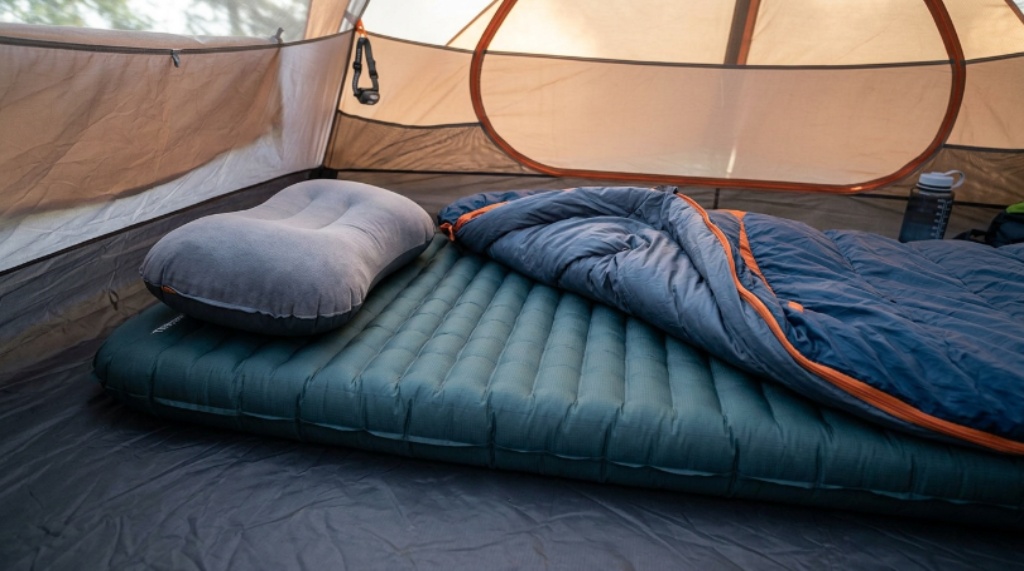
A good camping mattress and pillow combo is one of the smartest investments a side sleeper can make. When your pad and pillow work together, your entire sleep posture improves. Your neck stays aligned with your spine. Your hips and shoulders receive enough support. The result is deeper, more restorative sleep.
Setting Up Your Tent for Better Sleep
The gear you bring matters. However, where and how you set up your tent matters just as much. A few simple choices at campsite setup can dramatically improve your night.
First, choose flat ground whenever possible. Even a slight slope puts pressure on your body in unexpected ways. If the ground is not perfectly flat, position yourself so your head is slightly higher than your feet. Sleeping with your head downhill increases blood pressure in your head and makes deep sleep harder to achieve.
Second, clear the ground beneath your tent before you set up. Remove rocks, roots, sticks, and any hard debris. Even small objects feel enormous after a few hours of pressure. Take the time to do this properly and you will notice the difference.
Third, consider the direction you face while sleeping. Keep your tent opening accessible so you are not twisting awkwardly during the night. Position your sleeping pad lengthwise and make sure you have enough room to shift positions without hitting the tent wall.
Maintaining Good Sleep Posture Camping
Sleep posture camping is not just about what gear you use. It is also about the habits and adjustments you make throughout the night. Side sleepers tend to drift into positions that strain the lower back, especially when sleeping on a firmer surface than usual.
One of the most effective tools is a small pillow or a rolled-up piece of clothing placed between your knees. This keeps your hips aligned and reduces stress on your lower back and pelvis. It is a simple adjustment that makes a noticeable difference, especially on longer camping trips.
Additionally, try to avoid curling into a tight ball. It might feel comfortable at first, but this position rounds your spine and leads to stiffness over time. Instead, aim for a slightly extended side position with a gentle bend at the hips and knees. This keeps your spine in a more neutral alignment throughout the night.
Sleeping Bag Considerations for Side Sleepers
Your sleeping bag affects your comfort in ways that go beyond warmth. Side sleepers need enough room inside the bag to shift positions without feeling restricted. A bag that is too narrow will force you to stay in one position all night, which increases pressure on your hips and shoulders.
Look for sleeping bags labeled as “semi-rectangular” or “barrel-shaped.” These offer more room than traditional mummy bags without sacrificing too much warmth. Some manufacturers now produce sleeping bags specifically designed with extra hip and shoulder room for side sleepers.
Furthermore, make sure your sleeping bag temperature rating matches your expected conditions. Being too cold is one of the most common causes of poor sleep outdoors. When your body is cold, your muscles tense up and your sleep cycles shorten. Match your bag to the conditions and you will sleep more soundly.
Practical Outdoor Sleep Tips for Better Rest
Beyond gear and setup, a few behavioral habits can improve the quality of your sleep while camping. These outdoor sleep tips are easy to follow and make a genuine difference.
- Avoid caffeine in the afternoon and evening before bed. Caffeine stays in your system for several hours and makes falling asleep harder.
- Keep your sleeping area tidy. A cluttered tent leads to awkward positioning and interrupted sleep.
- Wear dry, comfortable layers to bed. Moisture from sweat or damp clothing drops your body temperature and disrupts sleep.
- Use earplugs or a white noise app if you are sensitive to outdoor sounds. Nature is beautiful, but it can also be loud.
- Eat a light meal before bed rather than a heavy one. Digestion raises your core temperature slightly, which can make deep sleep harder to reach.
Conclusion
Side sleepers face real challenges when camping. However, none of those challenges are impossible to overcome. The key is understanding why side sleeping is harder outdoors and making intentional choices to address that. Start with a quality air pad thick enough to cushion your hips and shoulders. Pair it with a supportive camping pillow that keeps your neck aligned. Set up your tent on flat, cleared ground. Use a pillow between your knees to protect your lower back. Choose a sleeping bag with enough room to move.
Additionally, small habits like avoiding caffeine, dressing in dry layers, and keeping your sleep space tidy all add up over the course of a night. When you combine the right gear with the right setup and the right habits, camping sleep stops being a struggle. It becomes something you actually look forward to.
Frequently Asked Questions
What is the best sleeping pad thickness for a side sleeper while camping?
Side sleepers generally need at least three inches of thickness for adequate pressure relief. Air pads in the three to four inch range allow you to adjust firmness and let your hips and shoulders sink in gently, which helps keep your spine aligned through the night.
Can I use a regular pillow for camping as a side sleeper?
You can, but it is not ideal. Regular pillows compress significantly inside a stuff sack and often lose their shape. A compressible camping pillow or a hybrid inflatable pillow designed for side sleepers will provide better and more consistent support for your neck while outdoors.
How do I stop waking up with lower back pain after camping?
Place a rolled-up garment or a small travel pillow between your knees when sleeping on your side. This aligns your hips and reduces strain on your lower back. Also ensure your sleeping pad is thick enough to prevent your hip from pressing all the way to the ground.
Is a mummy sleeping bag suitable for side sleepers?
Mummy bags are typically too narrow for comfortable side sleeping. They restrict movement and can feel claustrophobic during the night. Look for semi-rectangular or barrel-shaped bags that offer more room at the hips and shoulders without sacrificing warmth.
What campsite setup tips help side sleepers the most?
Choose the flattest ground available and remove all debris from beneath your tent before setting up. Position your head slightly higher than your feet if there is any slope. Make sure your sleeping pad runs lengthwise and gives you enough room to shift positions without pressing against the tent wall.
About Author
