Cooking clubs bring people together through shared meals, practical learning, and memorable experiences. Recent culinary education programs report that over 95% of participants enjoyed structured cooking sessions. Hands on cooking activities also improved confidence and healthy eating habits in many youth programs. Whether you meet weekly or monthly, creative themes keep every gathering exciting. The right ideas encourage teamwork, improve kitchen skills, and make every member eager for the next event.
Why Cooking Clubs Continue Growing
Cooking clubs offer much more than delicious food. Members develop kitchen confidence while building meaningful friendships through shared experiences.
Regular cooking sessions also improve planning, communication, and creativity. These valuable skills extend far beyond preparing meals.
Many clubs welcome beginners alongside experienced home cooks. Everyone learns by practicing instead of simply watching demonstrations.
A successful cooking club stays fun rather than competitive. Members feel comfortable asking questions and trying unfamiliar techniques.
How to Organize a Successful Cooking Club
Start with a manageable group size that allows everyone to participate. Six to twelve members often create balanced teamwork.
Create a simple schedule before the first meeting. Consistency helps members reserve time and stay committed.
Assign responsibilities before every session. Rotating tasks keeps everyone involved throughout the event.
Prepare ingredient lists several days ahead. Shopping early reduces stress and avoids missing essential items.
Always review food safety rules before cooking begins. Good habits protect every participant throughout each gathering.
Best Cooking Club Ideas to Try Now
Around the World Night
Choose one country during every meeting. Members prepare traditional recipes while learning about local food culture.
Decorations, music, and serving styles create a complete cultural experience. Every session feels like a culinary vacation.
Popular destinations include Italy, Japan, Mexico, Thailand, Greece, and Morocco. Each country offers unique flavors and cooking methods.
Mystery Ingredient Challenge
Select one secret ingredient before the meeting begins. Every team creates an original recipe featuring that ingredient.
Creative thinking becomes more important than perfection. Members often discover surprising flavor combinations.
Simple ingredients like sweet potatoes, mushrooms, lemons, or apples work especially well. Everyone starts with the same challenge.
Seasonal Harvest Cooking
Build menus around fresh seasonal produce. Ingredients taste better while supporting local growers whenever possible.
Spring menus may feature asparagus and peas. Autumn gatherings often celebrate squash, pumpkins, and apples.
Seasonal cooking encourages variety throughout the year. Members naturally expand their ingredient knowledge.
Healthy Meal Makeover
Choose a favorite comfort food every session. Then recreate it using healthier cooking techniques.
Bake instead of frying whenever practical. Fresh herbs also replace excessive salt without reducing flavor.
Members leave with recipes suitable for everyday meals. Healthy eating becomes enjoyable instead of restrictive.
Budget Friendly Cooking
Set an affordable spending limit for each meal. Creativity increases when ingredients remain simple.
Affordable meals often become family favorites. Smart planning also reduces unnecessary food waste.
Discuss shopping strategies after every session. Members exchange valuable money saving ideas.
Breakfast for Dinner
Serve breakfast dishes during evening meetings. This playful concept creates relaxed and enjoyable gatherings.
Prepare pancakes, omelets, breakfast burritos, or homemade granola. Everyone appreciates familiar comfort foods.
Fresh fruit adds colorful presentation to every table. Simple recipes also suit beginner cooks.
Homemade Bread Workshop
Dedicate one meeting entirely to bread making. Members learn mixing, kneading, proofing, and baking techniques.
Fresh bread fills the kitchen with wonderful aromas. Every participant enjoys taking home warm loaves.
Try different varieties during future meetings. Flatbreads, dinner rolls, and focaccia provide excellent variety.
Homemade Pasta Night
Teach members how to prepare pasta from scratch. Simple dough becomes impressive homemade meals.
Experiment with different shapes during every session. Fresh sauces complete the dining experience.
Making pasta together creates enjoyable teamwork. The finished meal rewards everyone’s effort.
Soup and Sandwich Pairing
Focus on comforting meals suitable throughout the year. Pair homemade soups with creative sandwiches.
Discuss flavor balance while tasting different combinations. Members quickly understand complementary ingredients.
This format works well for cooler months. Cleanup also stays relatively simple.
Dessert Baking Club
Reserve certain meetings for sweet recipes only. Members practice measuring, mixing, and decorating techniques.
Rotate between cookies, cakes, pies, and pastries. Every gathering introduces fresh baking skills.
Taste testing becomes the highlight of each session. Everyone leaves with delicious treats to share.
Street Food Festival
Recreate famous street foods from different regions. Small portions encourage members to sample several dishes.
Mini tacos, dumplings, sliders, and skewers create exciting variety. Presentation adds extra fun to the event.
Discuss how vendors traditionally prepare these foods. Cultural stories enrich every cooking session.
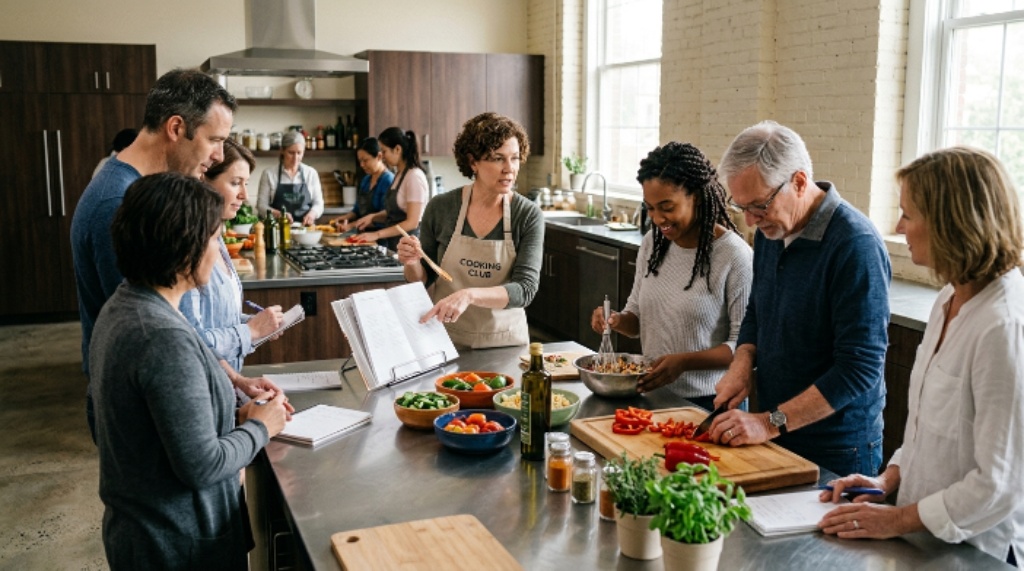
Plant Based Cooking Night
Explore vegetables, grains, beans, and legumes creatively. Many members discover satisfying meals without meat.
Colorful ingredients naturally brighten every table. Fresh herbs add bold flavor without complexity.
Plant based recipes also introduce unfamiliar ingredients. Members gain confidence preparing nutritious meals.
Family Recipe Exchange
Invite everyone to bring treasured family recipes. Each dish carries meaningful memories and traditions.
Members explain the history behind every recipe. Personal stories strengthen friendships within the club.
Collect recipes into a shared cookbook afterward. Future members will appreciate this lasting collection.
Chopped Style Friendly Competition
Divide participants into small teams before cooking begins. Provide identical ingredients for every group.
Judging focuses on creativity, presentation, and teamwork. Friendly encouragement matters more than winning.
Rotate judges during future meetings. Everyone eventually experiences every role.
Knife Skills Workshop
Dedicate one session entirely to cutting techniques. Proper skills improve speed, consistency, and kitchen safety.
Practice slicing, dicing, julienning, and chopping vegetables. Confidence grows through repeated practice.
Members immediately notice better cooking results afterward. Accurate cuts also improve presentation.
Fun Activities Beyond Cooking
Host recipe swap sessions between cooking nights. Members continue learning even outside regular meetings.
Arrange local market visits before seasonal gatherings. Fresh ingredients inspire exciting menu ideas.
Invite experienced home cooks for special demonstrations. New perspectives motivate everyone to improve.
Organize charity meal preparation projects together. Giving back strengthens club purpose while helping others.
Celebrate birthdays with themed cooking events. Personal milestones create stronger group connections.
Essential Equipment for Every Cooking Club
Basic kitchen tools simplify every cooking session. Quality equipment improves safety and consistency.
Useful items include:
- Sharp chef knife
- Cutting boards
- Mixing bowls
- Measuring cups
- Measuring spoons
- Baking sheets
- Saucepans
- Skillets
- Whisks
- Silicone spatulas
- Food thermometer
- Storage containers
Shared equipment reduces individual expenses. Members also learn proper tool maintenance.
Tips for Keeping Members Engaged
Rotate leadership responsibilities during every meeting. Fresh ideas naturally appear from different members.
Encourage constructive feedback after tasting each meal. Positive comments build confidence for future sessions.
Introduce new themes regularly throughout the year. Variety prevents meetings from becoming predictable.
Celebrate small achievements with simple certificates or awards. Recognition motivates continued participation.
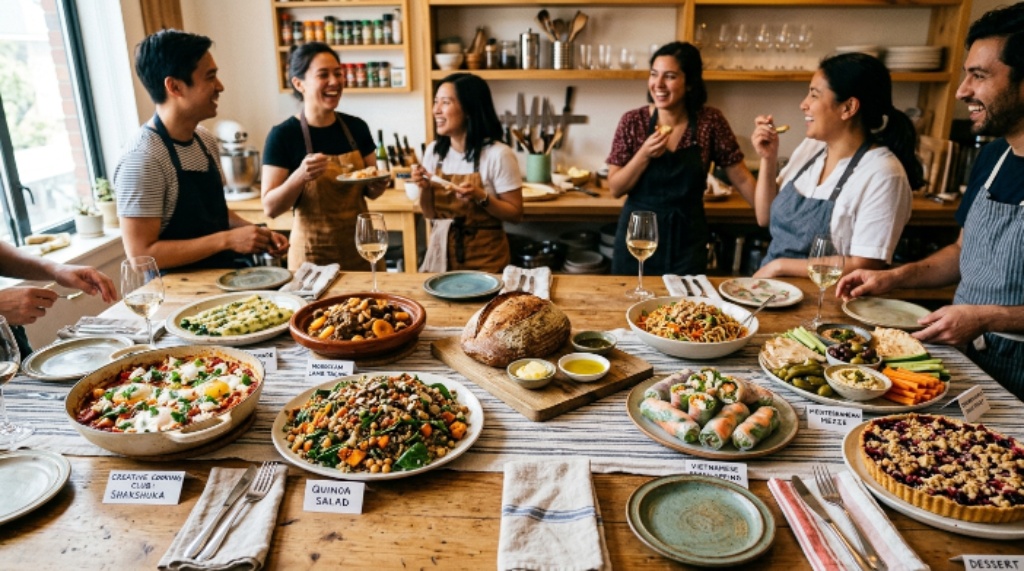
Share finished dishes through group photos afterward. These memories encourage future attendance.
Common Mistakes to Avoid
Avoid selecting recipes that require excessive preparation time. Long sessions often reduce enjoyment.
Never overlook food allergies before planning menus. Safety should always remain the highest priority.
Resist making every meeting overly competitive. Relaxed learning creates stronger long term participation.
Do not repeat identical cuisines too frequently. Variety keeps curiosity alive throughout the year.
Avoid complicated recipes for beginner members. Gradual progression builds confidence more effectively.
Conclusion
The best cooking club ideas combine learning, creativity, and enjoyable social experiences. Whether your group explores international cuisines, healthy recipes, baking projects, or seasonal ingredients, every gathering offers valuable opportunities to grow. Start with simple themes, encourage teamwork, and welcome every skill level. Plan your first cooking club meeting today and turn ordinary meals into unforgettable experiences.
FAQs
What is the best size for a cooking club?
A group of six to twelve members usually provides the best balance of participation and teamwork.
How often should a cooking club meet?
Most successful cooking clubs meet once every month or every two weeks.
What recipes work best for beginners?
Simple pasta dishes, soups, salads, tacos, and baked desserts are excellent beginner choices.
How can a cooking club reduce costs?
Buy seasonal ingredients, share equipment, and divide grocery expenses equally among members.
Should cooking clubs follow specific themes?
Yes, themed meetings keep members interested while introducing new recipes and cooking techniques.
About Author
