Fishing in Florida means dealing with saltwater, scorching sun, and fish that fight hard. Whether you’re wading the flats for redfish, casting from a jetty in the Keys, or wrestling snook around mangrove roots, your pliers are one of the most used tools in your bag. The problem is that cheap pliers rust, slip, or snap at the worst possible moment. The best fishing pliers for Florida need to handle corrosion, provide a secure grip, and survive years of hard use. This guide breaks down exactly what to look for, what to avoid, and how to match pliers to your specific style of fishing.
Why Saltwater Corrosion Is Your Biggest Enemy
Florida’s saltwater environment is brutal on metal. The combination of salt, humidity, and frequent splashes causes standard steel pliers to corrode within weeks. Once rust sets in, the jaws seize, the cutting edges dull, and the tool becomes useless. This is not a minor inconvenience—it’s a safety issue when you’re trying to remove a treble hook from a thrashing fish.
Corrosion-Resistant Materials That Actually Work
Not all corrosion-resistant materials perform equally. Here’s what you’ll find on the market and how each holds up in Florida conditions:
- Titanium: The gold standard for saltwater. Titanium never rusts, is lightweight, and stays strong. The downside is cost—titanium pliers are significantly more expensive than other options.
- Stainless Steel (Marine-Grade): Good quality 316 stainless steel resists corrosion well, but it’s not completely immune. Saltwater can still cause pitting over time, especially around the hinge and springs.
- Coated Carbon Steel: These have a corrosion-resistant coating like Teflon or powder coating. They work fine until the coating gets scratched. Once that happens, rust forms quickly. These are budget-friendly but not ideal for daily saltwater use.
- Aluminum with Anodized Finish: Lightweight and corrosion-resistant, but aluminum is softer than steel. The jaws can bend or deform if you’re putting serious pressure on heavy hooks.
For most Florida anglers, titanium is worth the investment if you fish regularly. If you’re on a budget, marine-grade stainless steel with a replaceable spring is a solid second choice.
Jaw Design and Grip: What Matters When the Fish Is Thrashing
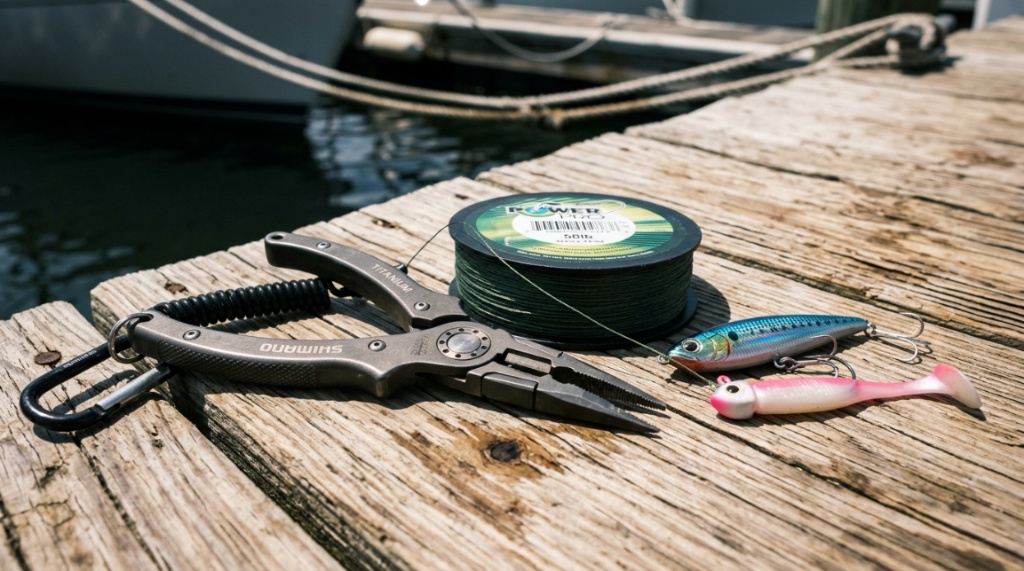
Pliers are only useful if you can hold onto what you’re grabbing. Slippery fish, wet hands, and slimy line make grip a critical factor. The jaw design determines how well you can hold hooks, split rings, and leaders.
Needle-Nose vs. Curved Jaws
Straight needle-nose pliers are the most common and work well for most tasks. They allow precise access to hooks buried deep in a fish’s mouth. Curved jaws, however, offer a distinct advantage when working in tight spaces like a fish’s throat or around gill plates. The curve lets you reach around corners without having to reposition the fish.
Grip Patterns and Textures
Look for jaws with a textured or cross-hatched grip pattern. This prevents hooks and split rings from sliding out when you’re applying pressure. Some pliers feature tungsten carbide inserts on the jaw tips, which provide an extremely hard, non-slip surface that also resists wear. These inserts are particularly useful for gripping braided line and thin wire.
Handle Ergonomics and Non-Slip Features
Your hands will be wet, often covered in sunscreen or fish slime. Handles with rubberized grips or textured surfaces prevent the pliers from slipping out of your hand. Some models have finger rings or a locking mechanism that keeps the pliers closed when not in use. This is handy for clipping them to a lanyard or your belt without worrying about them opening and snagging on something.
Cutting Ability: Braided Line and Wire Cutters
Cutting braided line is one of the most demanding tasks for fishing pliers. Braid is tough and can slide against dull cutters. You need sharp, hard cutting edges that can shear through line cleanly without fraying it.
Side Cutters vs. Center Cutters
Side cutters are located on the outside edge of the jaws. They work well for cutting line but can be awkward for reaching into tight spaces. Center cutters are positioned at the base of the jaws, closer to the hinge. They provide more leverage and are better for cutting heavier materials like wire or thick hooks. For Florida fishing, where you might be cutting through heavy fluorocarbon leaders or wire traces for toothy fish like barracuda, center cutters are a practical advantage.
Cutting Hardened Hooks
Some hooks are made from hardened steel that resists bending. Standard cutters will dull quickly on these. If you fish with heavy gauge hooks, look for pliers specifically rated for cutting hardened hooks. Titanium pliers often have replaceable cutting inserts made from tungsten carbide, which can handle hardened steel without losing their edge.
Split Ring Pliers: Do You Need Them?
Split ring pliers have a specialized tip with a small notch or pointed end designed to open split rings without damaging them. If you frequently change lures or replace hooks, these are incredibly useful. They allow you to open a split ring, slide on a new lure, and close it again without bending the ring out of shape.
Some anglers prefer a dedicated pair of split ring pliers in addition to their standard pliers. Others look for a combo tool that includes both a needle-nose tip and a split ring opener. The combo approach saves space in your tackle bag but often compromises on the effectiveness of both functions. A dedicated split ring tool is usually more precise.
Size and Weight: Matching Pliers to Your Fishing Style
The right size pliers depend on where and how you fish. A heavy pair of pliers is fine if you’re fishing from a boat with a tackle bag nearby. But if you’re wading or kayak fishing, every ounce matters.
Compact Pliers for Wading and Kayak Fishing
For wading the flats or paddling a kayak, choose pliers in the 5 to 6.5-inch range. These are lightweight, easy to clip to a lanyard, and won’t drag you down. They’re sufficient for most inshore species like redfish, trout, and snook. Look for models with a corrosion-resistant finish and a locking clip so you can attach them securely to your PFD or wading belt, Choosing the right gear for a family outing is just as important as equipping yourself; find out what Makes a Good Kids Fishing Rod and Reel Combo to ensure a smooth trip for younger anglers.
Full-Size Pliers for Offshore and Heavy Tackle
For offshore fishing, pier fishing, or targeting large species like grouper and amberjack, you need longer pliers in the 7 to 9-inch range. The extra length gives you more leverage for cutting heavy line and removing large hooks. It also keeps your hands farther from the fish’s mouth, which is a safety benefit when dealing with toothy species.
Key Features to Look For and Common Mistakes to Avoid
When you’re comparing options, certain features separate high-quality pliers from disposable ones. Pay attention to these details before making a purchase.
Replaceable Springs and Parts
The spring that keeps the pliers open is often the first thing to fail. Look for pliers with a replaceable spring. This simple feature extends the life of the tool significantly. Some manufacturers also offer replaceable cutting inserts and jaw tips, which means you can refresh the pliers instead of buying a new pair.
Locking Mechanisms
A locking mechanism that holds the pliers closed is useful for storage and safety. It prevents the pliers from accidentally opening and snagging on your gear. It also keeps the cutting edges protected when not in use.
Mistake: Buying Cheap Pliers to Save Money
The most common mistake Florida anglers make is buying budget pliers to save money. A $10 pair of pliers might last a few trips before rusting or breaking. You’ll end up buying replacements repeatedly, spending more in the long run. Investing in a quality pair of corrosion-resistant pliers is more economical over time.
Mistake: Ignoring the Lanyard Attachment Point
Dropping your pliers overboard is a real risk, especially when fishing from a kayak or boat. A secure lanyard attachment point is essential. Look for pliers with a hole or clip that can accommodate a lanyard or retractor. Attach the lanyard to your PFD or boat console so your pliers stay within reach.
How to Maintain Your Pliers for Longevity
Even the best pliers require some maintenance to perform at their best. A few simple habits will keep your pliers working smoothly for years.
- Rinse with fresh water: After every fishing trip, rinse your pliers thoroughly with fresh water. This removes salt residue that accelerates corrosion.
- Dry completely: Shake off excess water and dry the pliers with a towel. Pay attention to the hinge area where moisture tends to collect.
- Lubricate the hinge: Apply a drop of corrosion-inhibiting oil or lubricant to the hinge and spring periodically. This keeps the action smooth and prevents seizing.
- Inspect for damage: Check the cutting edges and jaw tips regularly for wear or damage. Replace worn inserts or springs as needed.
Frequently Asked Questions
What size pliers are best for inshore Florida fishing?
For inshore species like redfish, trout, and snook, pliers in the 5.5 to 6.5-inch range are ideal. They’re lightweight, easy to handle, and provide enough leverage for most hooks and line sizes used in inshore fishing.
Are titanium pliers worth the extra cost?
Yes, if you fish saltwater regularly. Titanium pliers never rust, are lightweight, and last significantly longer than stainless steel or coated options. The higher upfront cost is offset by the fact that you won’t need to replace them as frequently.
Can I use freshwater pliers in saltwater?
You can, but they won’t last long. Freshwater pliers are typically made from standard steel that corrodes quickly in saltwater. If you plan to fish in Florida’s coastal waters, invest in pliers specifically designed for saltwater use.
How do I keep my pliers from rusting?
Rinse them with fresh water after every trip, dry them completely, and apply a light coat of corrosion-inhibiting oil to the hinge and cutting edges. Proper maintenance is the most effective way to prevent rust.
What is the difference between side cutters and center cutters?
Side cutters are located on the outside edge of the jaws and are good for cutting line. Center cutters are positioned near the hinge and provide more leverage for cutting heavier materials like wire or thick hooks. Center cutters are better for heavy-duty saltwater fishing.
Conclusion
Choosing the right pliers for Florida fishing comes down to understanding the environment and your specific needs. Saltwater corrosion is unavoidable, so prioritize corrosion-resistant materials like titanium or marine-grade stainless steel. Consider the jaw design and grip for handling slippery fish, and make sure the cutting edges can handle braided line and wire. Match the size and weight to your fishing style, and don’t overlook features like replaceable springs and lanyard attachment points. With proper maintenance, a quality pair of pliers will serve you well for many seasons. Take your time, compare your options, and invest in a tool that won’t let you down when you need it most.
About Author
