Falling asleep on a plane is rarely as easy as closing your eyes. Between the cramped legroom, the hum of the engines, and the constant angle of your neck, true rest often feels impossible. You wake up with a stiff neck, a dry mouth, and that groggy feeling that makes your destination feel further away than it actually is. The culprit is usually poor head support. A good travel pillow can change that, but only if you choose the right one and use it correctly. This air travel neck pillow sleep guide covers everything you need to know to actually rest on your next flight, from choosing the right shape to positioning it properly in a cramped seat.
Why Most Travel Pillows Fail You
The biggest mistake travelers make is buying the first U-shaped pillow they see at the airport gift shop. These generic pillows are often too thin, too firm, or simply the wrong shape for your body. They push your head forward instead of supporting it, which leads to that dreaded “nodding” sensation that wakes you up every few minutes.
Another common issue is size. A pillow that fits a 5’2″ person perfectly will feel completely different for someone who is 6’3″. Your neck length, shoulder width, and even your preferred sleeping position all affect how well a pillow works. There is no universal fit, and pretending otherwise is why so many people give up on travel pillows entirely.
Finally, many travelers use their pillow incorrectly. They place it behind their head when they should be using it to support the side of their neck, or they inflate it too much, creating a hard surface that causes more discomfort than relief. Understanding how your pillow should interact with the seat and your body is half the battle.
Choosing the Right Pillow Shape for Your Sleep Style
Not all neck pillows are created equal. The shape you choose should match how you naturally sleep, not just what looks comfortable in the store. Here is a breakdown of the main types and who they work best for.
U-Shaped Pillows
The classic U-shape wraps around your neck and is designed to prevent your head from dropping forward. These work well for back sleepers who tend to nod off upright. However, they often lack side support. If you tend to lean your head against the window, a standard U-pillow may not be thick enough to fill the gap between your shoulder and the window.
J-Shaped and Hook-Style Pillows
These pillows are longer on one side, allowing you to hook the extended portion over the headrest or tuck it under your chin. The J-shape is excellent for side sleepers because it provides more surface area for your cheek and jaw. It also gives you something to grip with your shoulder, which can feel more stable than a symmetrical U-shape.
Inflatable Pillows
Inflatable options are a favorite among minimalists because they pack down to almost nothing. The trade-off is comfort. You have to get the inflation level exactly right. Too firm and it feels like a rock; too soft and it offers zero support. Some newer inflatable models have a two-chamber design that lets you adjust the firmness of the top and bottom independently, which is a significant improvement over older single-chamber versions, Proper care also ensures your travel accessories remain fresh and supportive over time; learn more maintenance tips in our guide on Daily Habits That Help Pillows Last Longer.
Memory Foam vs. Microbead Fill
Memory foam contours to your neck and distributes pressure evenly. It is the best choice for long-haul flights where you need consistent support for hours. The downside is bulk. Microbead pillows are lighter and more packable, but they offer less structured support. They tend to shift around and can feel lumpy after extended use. If you are on a budget, microbead is fine for a short domestic hop, but for overnight flights, memory foam is worth the extra space in your bag.
How to Position Your Pillow for Maximum Support
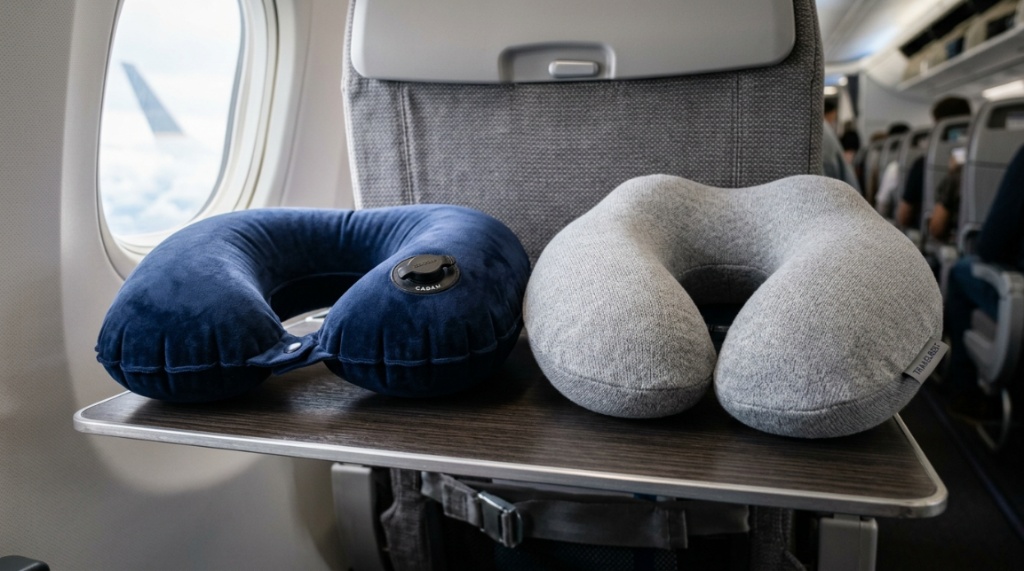
Once you have the right pillow, positioning is everything. Most people make the mistake of placing the pillow behind their neck and leaning back. This works only if the seat headrest is at the perfect height, which it almost never is.
Instead, try this approach. Sit all the way back in your seat so your lower back is against the seatback. Then, place the pillow around your neck, ensuring the thicker part of the cushion sits under your jaw, not behind your skull. This prevents your head from tilting backward, which closes your airway and can cause snoring or a sore throat.
If you are leaning against the window, rotate the pillow so the thicker side is between your head and the window pane. This fills the gap and keeps your spine aligned. Do not just rest your head on the window itself, as the vibration and hard surface will wake you up.
Adjusting the Seat Headrest
Many modern airplane seats have adjustable headrests with folding wings. Use them. Fold the wings forward slightly so they cradle your head without pushing it too far forward. The goal is to keep your ears aligned over your shoulders. If the headrest is too low, it pushes your head forward. If it is too high, it forces your chin down toward your chest. Take a minute to adjust it before takeoff so you are not fumbling with it in the dark during the flight.
Practical Tips for Sleeping on a Plane
A pillow is only one piece of the puzzle. Your environment and habits play a huge role in how well you sleep at 35,000 feet. Here are some practical adjustments that make a real difference.
- Dress in layers: Cabin temperatures fluctuate wildly. A light hoodie or scarf can double as a blanket and a neck warmer. Cold neck muscles are more prone to stiffness.
- Use a sleep mask: The cabin lights are rarely dimmed to your liking. A quality mask blocks out the light that signals your brain to stay awake.
- Bring earplugs or noise-canceling headphones: The constant drone of the engines is actually a consistent noise, but crying babies and chatty neighbors are not. Block them out.
- Skip the alcohol and caffeine: Both disrupt your sleep cycles. Alcohol may make you drowsy, but it leads to fragmented sleep and dehydration. Caffeine keeps your nervous system on edge.
- Stay hydrated: The cabin air is incredibly dry. Drink water before and during the flight. Dehydration causes headaches and makes you feel groggy even if you do sleep.
Common Mistakes That Ruin Your In-Flight Sleep
Even with the best pillow, certain habits will sabotage your rest. Here are the most common mistakes travelers make and how to avoid them.
Over-Inflating or Over-Stuffing the Pillow
More support is not always better. If your pillow pushes your head too far to one side or lifts your chin too high, your neck muscles will fight against it all night. You want the pillow to hold your head in a neutral position, not stretch it. If you feel pressure points, let some air out or fluff the pillow to redistribute the fill.
Leaning Forward on the Tray Table
Sleeping on the tray table with your head on a folded jacket might seem comfortable, but it compresses your spine and twists your neck. It also puts pressure on your stomach, which can cause discomfort. This position is only viable for a short nap, not for sustained sleep.
Ignoring the Recline Function
Reclining your seat slightly can make a huge difference in how your neck rests on the pillow. You do not need to recline all the way, but even a 10-degree tilt takes the strain off your lower back and allows your head to rest more naturally against the headrest. Be polite to the person behind you, but do not be afraid to use the recline function you paid for.
When to Consider a Different Type of Pillow
Sometimes a neck pillow is not the answer. If you are flying in a lie-flat business class seat, a neck pillow is unnecessary and may even be uncomfortable. In that case, a small lumbar support pillow is a better investment.
If you are traveling with a toddler or young child, your needs are different. A neck pillow designed for adults will not fit a child properly. Look for a smaller, softer option specifically designed for kids, or use a rolled-up blanket for support.
For those who simply cannot get comfortable with any pillow, consider a hoodie pillow. These are hoodies with a built-in inflatable pillow in the hood. They provide support and also block out light and noise. They are a niche solution, but they work well for some people.
Maintaining Your Pillow for Longevity
Travel pillows collect dirt, oils, and germs. Washing them regularly is essential, especially if you use them frequently. Check the care label before washing. Most memory foam pillows cannot be machine washed, as the foam will break down. Instead, spot clean them with a mild detergent and water. Inflatable pillows can be wiped down with a disinfectant wipe. Microbead pillows are often machine washable on a gentle cycle, but always air dry them to prevent the beads from clumping.
Proper storage also matters. Do not stuff your pillow into the bottom of your bag where it will be crushed. Many pillows come with a compression sack or a clip that allows you to attach them to the outside of your carry-on. Keeping it clean and properly stored will extend its life significantly.
Frequently Asked Questions
How tight should a travel neck pillow be?
The pillow should be snug but not tight. You should be able to fit two fingers between the pillow and your neck. If it is pressing against your jaw or pushing your chin up, it is too tight. The goal is to support your head, not to hold it in a vice grip.
Can I use a travel pillow on a train or in a car?
Yes. Travel pillows work anywhere you sit upright for extended periods. They are especially useful on long train rides and as a passenger in a car. The same principles of positioning apply: keep your ears aligned over your shoulders and your spine neutral.
Are expensive travel pillows worth the money?
Not always. The price of a pillow does not guarantee a good fit. A mid-priced memory foam pillow that fits your neck properly will outperform a high-end pillow that is the wrong shape for you. Focus on the material and the shape rather than the brand name or price tag.
How do I clean a memory foam travel pillow?
Do not machine wash memory foam. The agitation will break down the foam structure. Instead, remove the cover if it is removable and wash that. For the foam itself, use a damp cloth with a small amount of mild soap to spot clean stains. Rinse the cloth and wipe again to remove any soap residue. Air dry completely before using.
What is the best position to sleep in an economy seat?
The best position is sitting upright with a slight recline, using a neck pillow to support the side of your head. If you are by the window, lean against the wall with the pillow between your head and the window. Avoid leaning forward, as this compresses your spine and restricts breathing.
Conclusion
Getting good sleep on a plane is not about finding a magic pillow that works for everyone. It is about understanding your own body, choosing the right shape and material for your needs, and using it correctly in the confined space of an airplane seat. Focus on keeping your neck aligned, adjust your seat and headrest properly, and do not forget the basics like hydration and blocking out light and noise. With the right approach, you can land at your destination feeling refreshed instead of drained. Take the time to find a pillow that fits you, and practice using it at home before your flight so you are not figuring it out at 30,000 feet.
About Author
