Two anglers fish the same stretch of water with rods that cost roughly the same. One feels every pebble, every soft tap, every change in bottom composition. The other feels almost nothing until the fish is already hooked. The difference is rarely luck — it comes down to how the rod blank transmits energy, and how well the whole setup works together. If you are working through a guide to choosing a carbon fiber fishing combo, understanding what sensitivity actually is will help you judge specifications instead of guessing. This article breaks down the real mechanics behind sensitive, responsive rods — and the trade-offs most buyers never hear about.
Quick Answer
Sensitivity comes mostly from the rod blank: carbon fiber modulus, wall thickness, resin quality, and how the blank is constructed. Higher-modulus graphite transmits vibration faster and with less damping, which is why it feels more sensitive. Responsiveness is different — it describes how quickly the rod recovers and returns energy during a cast or hookset. A rod can be sensitive but slow, or fast but dull. The best rods balance both, and the guides, line, reel seat, and grip all influence how much of that sensitivity actually reaches your hand.
Key Takeaways
- Sensitivity is about vibration transmission; responsiveness is about energy transfer and recovery speed. They are related but not the same thing.
- Blank material and construction matter more than any other single factor, but guides, line type, and grip design can mask or amplify what you feel.
- Higher modulus carbon is more sensitive and lighter, but also more brittle and less forgiving of knocks and high-sticking.
- Braid transmits vibration far better than monofilament, so line choice can change how “sensitive” a rod feels without changing the rod at all.
- Match the rod’s power and action to your technique — a rod tuned for finesse will feel dead when used for heavy cover fishing, and vice versa.
What Sensitivity Actually Means in a Fishing Rod
Sensitivity is the rod’s ability to transmit vibration from the line to your hand. When a fish mouths a lure, when a jig ticks a rock, or when a soft plastic brushes weed, the rod blank carries those vibrations down to the grip. A sensitive rod carries more of that signal with less loss.
Three things determine how much signal survives the trip:
- Material stiffness-to-weight ratio. Carbon fiber with a higher modulus is stiffer per unit of weight, so it deforms less under its own mass and transfers vibration more efficiently.
- Blank wall thickness and taper. Thin, carefully tapered walls flex predictably and recover quickly. Thick, blunt walls absorb vibration instead of passing it along.
- Resin and layup quality. The resin holds the carbon fibers together. Cheap resin dampens vibration; better resin systems preserve it.
This is why two rods with the same length and power rating can feel completely different. The specification sheet rarely tells you the full story.
Responsiveness Is Not the Same as Sensitivity
Responsiveness describes how quickly the rod returns to its resting position after being loaded — during a cast, a hookset, or a fight. A responsive rod snaps back fast, which means:
- Casts feel crisp and predictable, with less wobble after release.
- Hooksets transfer energy to the hook instead of bending the rod further.
- You feel the lure working immediately after it lands, rather than waiting for the tip to settle.
A rod can be highly sensitive but sluggish (common in some heavy, soft blanks), or very responsive but dull (common in stiff, cheap blanks that transmit little detail). The rods anglers describe as “alive” usually score well on both, To find the ideal starter setup for younger anglers, check out our guide on what makes a good kids fishing rod and reel combo.
How Carbon Fiber Modulus Affects Feel
Modulus is a measure of stiffness. In fishing rods, it is usually expressed in millions of psi or as a tonnage rating (for example, 30-ton, 40-ton, 46-ton carbon). Higher modulus means stiffer fibers, which usually means:
- Lighter blanks for the same power
- Faster vibration transmission
- Better responsiveness
- Less tolerance for abuse
That last point matters. High-modulus carbon is more brittle. It does not like being stepped on, slammed in a car door, or bent past its intended curve. A 30-ton blank will survive mistakes that might crack a 46-ton blank. For most freshwater anglers, mid-modulus graphite offers the best practical balance of feel and durability.
The Parts That Quietly Steal Sensitivity
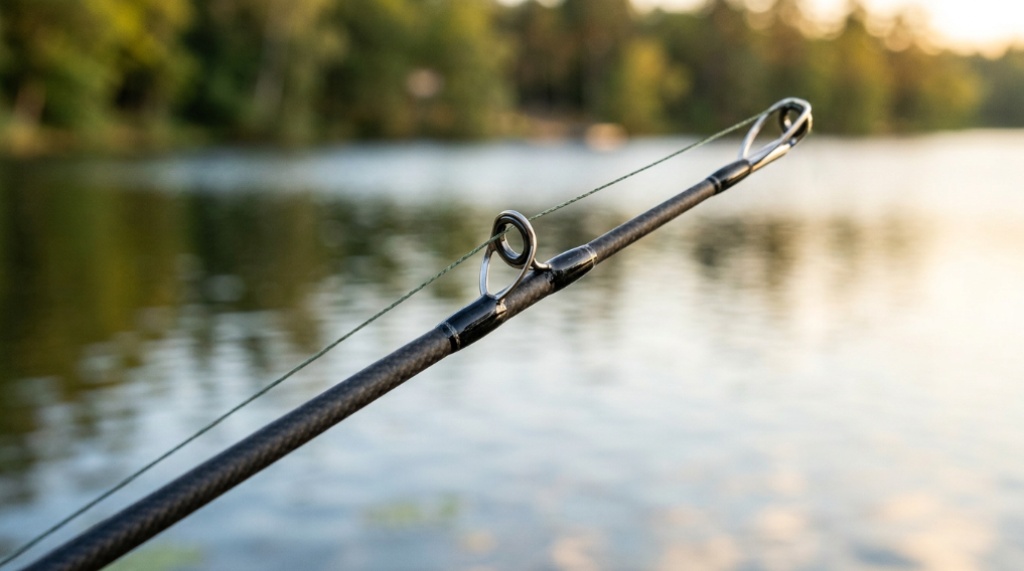
Even an excellent blank can feel dead if the components work against it. These are the usual culprits:
Guides
Heavy stainless guides with thick frames add weight to the tip, which slows recovery and dampens vibration. Lighter guide frames and fewer guides reduce that penalty. Guide ring material also matters — hard, smooth rings like silicon carbide reduce friction, which lets braid transmit vibration more cleanly.
Line Type
This is the most overlooked factor. Braided line has almost no stretch, so it passes vibration directly to the rod. Monofilament and fluorocarbon stretch under load, absorbing some of that signal before it ever reaches the blank. Switching from mono to braid on the same rod can feel like upgrading the rod itself.
Reel Seat and Grip
A reel seat that fits your hand well and holds the reel firmly without flex improves contact. Exposed-blank grips — where your fingers touch the bare carbon — transmit more vibration than a fully covered handle. Cork and EVA foam both dampen slightly, but cork tends to feel more “connected” to many anglers.
Reel Weight and Balance
A heavy reel moves the balance point forward, which forces you to grip harder and reduces the fine feedback reaching your fingers. A balanced combo feels lighter and more sensitive than its total weight suggests.
Sensitivity vs Durability: The Trade-Off You Cannot Avoid
There is no free lunch here. The properties that make a rod sensitive — light weight, high modulus, thin walls — also make it more fragile. The properties that make a rod durable — thicker walls, lower modulus, more material — add weight and dampen feel.
| Rod Characteristic | Sensitivity | Durability | Best For |
|---|---|---|---|
| High-modulus carbon, thin walls | High | Lower | Finesse, drop-shot, light jigs, clear water |
| Mid-modulus carbon, moderate walls | Moderate to high | Good | All-around freshwater use |
| Low-modulus or composite blank | Lower | High | Heavy cover, beginners, rough handling |
If you fish rocky banks, transport rods loose in a truck bed, or hand rods to kids, a slightly less sensitive but tougher blank is usually the smarter buy. If you are chasing pressured fish with light line, sensitivity wins.
How to Judge Sensitivity Before You Buy
You cannot test a rod on the water in a shop, but you can gather useful signals:
- Check the weight. Lighter rods in the same length and power class generally transmit more vibration. Compare actual weights, not marketing claims.
- Flex the tip gently. A rod that returns to straight quickly and without lingering wobble is more responsive.
- Tap the blank. Lightly flick the tip with a fingernail. A sharper, higher-pitched ring usually indicates a stiffer, more resonant blank.
- Hold the grip. If your fingers can contact the blank above the reel seat, you will feel more. If the handle is bulky and your hand wraps thick foam, expect less feedback.
- Match the reel you plan to use. Balance matters. A rod that feels tip-heavy in the shop will feel worse after a few hours on the water.
Common Mistakes That Kill Rod Feel
- Overpowering the rod. Using a heavy-power rod for finesse presentations hides bites instead of revealing them.
- Running monofilament on a sensitive blank. You paid for sensitivity and then installed a shock absorber.
- Ignoring line diameter. Thicker line sinks slower and transmits less vibration than thin braid or fluorocarbon.
- Gripping too hard. A death grip on the handle deadens the feedback reaching your fingers. Relax your hand and let the rod do the work.
- Storing rods rigged and bent. Long-term stress can warp a blank and permanently reduce its responsiveness.
- High-sticking. Lifting a fish by bending the tip past 90 degrees is the fastest way to break a high-modulus blank.
Matching Sensitivity to Your Fishing Style
Not every technique benefits equally from maximum sensitivity. A few practical pairings:
- Drop-shot and Ned rigs: High sensitivity matters most. You need to feel the difference between a rock, a weed, and a bite.
- Crankbaits and spinnerbaits: Responsiveness and moderate sensitivity matter more than extreme feel. A slightly softer tip helps with hook retention.
- Jigging in deep water: Sensitivity is critical because line angle reduces feedback. Braid plus a fast, sensitive blank is the standard setup.
- Topwater: You see the strike, so extreme sensitivity is less important. Responsiveness and tip action matter more.
- Heavy cover flipping: Power and durability outweigh sensitivity. You will feel the bite through the line regardless.
Frequently Asked Questions
Does a more expensive rod always feel more sensitive?
No. Price often correlates with lighter components and higher-modulus blanks, but a well-built mid-range rod with good guides and braided line can out-feel an expensive rod paired with stretchy monofilament. Setup matters as much as the blank.
Is braid always better for sensitivity?
Braid transmits vibration better than mono or fluorocarbon because it has almost no stretch. However, braid has no shock absorption, so it can pull hooks on hard-fighting fish or when using treble-hook lures. Many anglers use a short fluorocarbon leader to balance feel and forgiveness.
Can a rod lose sensitivity over time?
Yes, in a few ways. Repeated stress, heat exposure, and physical damage can weaken the blank and change how it flexes. Worn guide rings create friction that dulls feedback. Replacing damaged guides and avoiding prolonged heat exposure in a hot vehicle helps preserve feel.
What is the difference between fast action and sensitivity?
Action describes where the rod bends — fast action bends mostly in the top third, slow action bends deeper into the blank. Sensitivity describes how well the rod transmits vibration. A fast-action rod is not automatically more sensitive, though fast actions often pair well with techniques that demand feel.
Do lighter guides really make a noticeable difference?
They can. Reducing weight at the tip improves recovery speed and reduces damping. The effect is most noticeable on longer rods and lighter-power blanks, where tip weight is a larger proportion of total mass.
Should beginners prioritize sensitivity?
Not at the expense of durability. Beginners tend to handle rods less carefully, and a broken high-modulus blank ends the trip. A mid-modulus, moderate-action rod with decent guides is a better starting point, and sensitivity can come later.
Conclusion
Sensitivity and responsiveness are not marketing buzzwords — they are measurable outcomes of blank material, construction, and the components bolted onto it. Focus on the blank first, then make sure your guides, line, and reel are not working against it. Match the rod’s power and action to the technique you actually fish, and accept that higher sensitivity usually means lower durability. Get those fundamentals right, and you will feel more bites, set hooks faster, and stop blaming the fish for missed opportunities.
About Author
