Most Texas paddleboarders pick a waterway because it’s close to home or looks good on Instagram, then discover the hard way that wind, current, boat traffic, or tidal shifts have other plans. A lake that’s perfect for a beginner on a calm morning can turn punishing by noon, while a slow river or a sheltered coastal bay might suit your skill level far better. Before you load your board, it helps to think about how you’ll inflate and manage your gear on site — something a portable solution like CoolSurfingGear can influence when you’re working from a truck bed or a sandy shoreline. This guide breaks down lakes, rivers, and the coast so you can match the waterway to your ability, your goals, and the conditions you can realistically handle.
Quick Answer
Choose a lake for calm, beginner-friendly flatwater and predictable conditions; a river for current, scenery, and downstream travel that rewards intermediate skills; and the coast for open water, waves, and wind that demand experience, tide awareness, and safety gear. For most Texas paddlers starting out, a sheltered lake or a slow-moving river is the safest and most enjoyable choice. Coastal bays can work well for confident paddlers who check tides, wind, and weather first.
Key Takeaways
- Lakes offer the most predictable conditions and are the best starting point for beginners.
- Rivers add current, which affects speed, steering, and how far upstream you can realistically paddle.
- Coastal paddling introduces tides, wind, waves, and saltwater gear care that lakes and rivers don’t.
- Texas heat and afternoon wind matter on every waterway, so paddling early is usually smarter.
- Match the waterway to your skill level before you match it to your schedule or location.
Why the Waterway Choice Matters More Than the Board
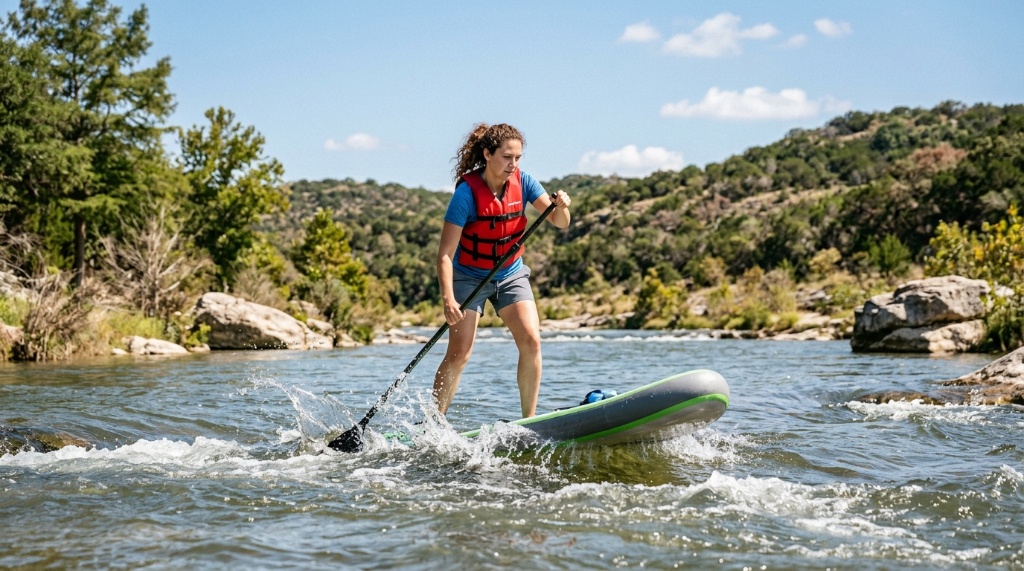
A common mistake is treating all Texas water like a single category. It isn’t. A reservoir outside Austin, a spring-fed river in the Hill Country, and a Gulf bay near Corpus Christi behave in fundamentally different ways. The same board and the same paddler can have a relaxed morning on one and a stressful, exhausting session on another.
Waterway type determines the forces acting on you: wind exposure, current, tides, waves, water temperature, and boat traffic. Those forces, not the board itself, dictate how hard you’ll work and how safe you’ll be. Choosing the right waterway first means everything else — leash, PFD, pump, hydration — falls into place more easily.
Lakes and Reservoirs: The Predictable Option
Lakes are the most beginner-friendly Texas waterway overall. They offer flatwater, no current, and generally calmer mornings. That predictability is exactly what new paddlers need to build balance and confidence without fighting moving water.
Texas has plenty of options, from large reservoirs like Lake Travis and Lake Texoma to smaller urban lakes and park ponds. Most have boat ramps or paddle launches, which makes getting on the water straightforward.
What makes lakes easier
- No current to push you off course
- Generally consistent, mappable conditions
- Open water for practicing turns, self-rescue, and balance
- Easy to paddle out and back to the same spot
Where lakes get harder
Lakes aren’t automatically calm. Large Texas reservoirs can develop significant chop when afternoon winds pick up, and open water gives wind a long fetch to build waves. Boat wakes from pontoons and powerboats add sudden, choppy water that can knock an unprepared paddler off balance. Wind is the biggest variable on a lake, and it tends to strengthen as the day heats up.
In summer, exposed lakes can also be brutally hot with little shade, and water levels can drop significantly during drought, exposing stumps and changing launch areas. Check local conditions and avoid the middle of a windy afternoon if you’re new.
Rivers: Current, Character, and Commitment
Rivers reward intermediate paddlers with scenery and a sense of travel, but current changes everything. On a river you’re rarely paddling in place. Even a slow current carries you downstream, which is relaxing in one direction and tiring in the other.
How current affects your trip
The key planning question on a river is simple: how will you get back? If you paddle upstream first, you’ll fight current on the way out and coast home. If you paddle downstream first, you’ll need a shuttle, a second vehicle, or a plan to walk or ride back. Ignoring this is one of the most common river mistakes.
Current speed also varies with rainfall and releases from dams. A stretch that’s gentle one week can run fast and murky after a storm. Spring-fed and slow Hill Country rivers tend to be more forgiving, while rivers below dams can change flow on short notice.
River hazards to respect
- Strainers — fallen trees and branches that can trap a paddler
- Low-head dams, which create dangerous recirculating water
- Shallow rock gardens that can damage a fin or a rigid board
- Changing flow after rain or upstream releases
Rivers are a great fit if you want moving water, wildlife, and a genuine sense of a journey. They’re a poor fit if you want zero surprises or you haven’t yet practiced reading current and eddies.
The Coast and Bays: Open Water With Real Consequences
Coastal paddling demands the most skill and preparation of the three options. Conditions change fast, and the environment is less forgiving. That said, sheltered bays and calm inlets can be surprisingly manageable on a good day.
The Texas coast includes barrier islands, bays, estuaries, and open Gulf water. Bays like those near Galveston, Rockport, and Corpus Christi are popular because they’re more protected than the open Gulf, but they still come with tides, wind, and boat traffic.
What’s different at the coast
- Tides: water levels and currents shift through the day, affecting launch spots and travel
- Wind: coastal wind is often stronger and more persistent than inland wind
- Waves and swell: even small surf can make launching and landing tricky
- Saltwater: requires rinsing your board, pump, and gear after use to prevent corrosion
- Wildlife and rules: certain areas have restrictions to protect shorebirds and habitat
Coastal paddling is best for experienced paddlers who check tide charts, wind forecasts, and marine conditions before launching. A leash and PFD are non-negotiable, and paddling with a buddy is strongly advised in open or unfamiliar water.
Lake vs. River vs. Coast: A Side-by-Side Comparison
| Factor | Lake / Reservoir | River | Coast / Bay |
|---|---|---|---|
| Current | None | Constant downstream flow | Tidal currents |
| Wind exposure | Moderate to high on big lakes | Usually lower, sheltered banks | High and persistent |
| Waves | Boat wakes and wind chop | Minor, mostly riffles | Wind waves and swell |
| Skill level | Beginner-friendly | Intermediate | Intermediate to advanced |
| Best for | Practice, fitness, calm sessions | Scenery, travel, moving water | Open-water experience, exploring |
| Main risks | Wind, boat traffic, heat | Current, strainers, low-head dams | Tides, wind, waves, saltwater |
| Gear note | Standard setup | Watch fins and shallow rocks | Rinse everything after use |
How to Choose Based on Your Situation
Rather than asking which waterway is “best,” ask which one fits you right now.
You’re a beginner
Start on a lake or a slow, gentle river on a calm morning. Focus on balance, turning, and getting back on your board. Avoid the coast until you’re comfortable in chop and can handle wind.
You want a workout
Open lakes with wind give you resistance and distance. Rivers going upstream offer a hard, focused effort. Coastal bays on a windy day are the most demanding of all.
You want scenery and a journey
A river is hard to beat. Point-to-point paddling, wildlife, and changing banks create an experience a lake loop can’t match — provided you’ve planned your shuttle.
You want variety and challenge
The coast delivers, but only if you respect the conditions. Build your open-water skills on calmer days first, and never treat a bay like a lake.
Common Mistakes to Avoid on Texas Waterways
- Starting a lake paddle late in the day and getting caught in afternoon wind.
- Heading downstream on a river with no plan to get back.
- Underestimating coastal wind and tide because the launch looks calm.
- Skipping the PFD because the water looks flat.
- Leaving saltwater on your gear and pump, which speeds corrosion.
- Ignoring Texas heat and running out of water on an exposed lake.
Frequently Asked Questions
Is paddleboarding on a lake easier than on a river or the coast?
Yes, generally. Lakes have no current and more predictable conditions, which makes them the easiest place to learn. Rivers add current and the coast adds tides and wind, both of which raise the difficulty and required skill.
Can beginners paddleboard on a Texas river?
Yes, if the river is slow-moving and shallow and you paddle a short section. Beginners should avoid fast flow, low-head dams, and stretches with lots of strainers until they’ve built confidence and current-reading skills.
Do I need a leash on the coast but not on a river?
Leashes are important in most conditions, but the type matters. On moving rivers, a quick-release leash is safer so you aren’t trapped if it snags. On the coast, a leash keeps you connected to your board in wind and waves. Lakes generally allow a standard leash.
What’s the best time of day to paddleboard in Texas?
Early morning is usually best on all three waterways. Wind tends to build through the afternoon, heat peaks midday, and boat traffic increases later. An early start gives you calmer water and cooler temperatures.
Does saltwater damage a paddleboard?
Saltwater itself is manageable if you rinse thoroughly after each session. Left unrinsed, salt can corrode hardware and valves over time. Rinsing your board, pump, and accessories with fresh water extends their lifespan.
Which Texas waterway is safest for a solo paddler?
A calm lake with other people around is generally the safest solo option. Rivers and coastal bays introduce current, tides, and fast-changing conditions that make going alone riskier, even for experienced paddlers.
Conclusion
The right Texas waterway comes down to your skill level and the conditions you can handle. Lakes offer the calm, predictable water that beginners need. Rivers add current and scenery for paddlers ready to plan a route and manage moving water. The coast delivers open-water challenge for experienced paddlers who respect tides, wind, and waves. Start where your skills fit, paddle early to beat the wind and heat, and build up to harder conditions. Match the waterway to you — not the other way around — and every session gets better.
About Author
