Planning an extended vacation requires careful preparation, and choosing the right luggage ranks among the most important decisions you’ll make. The perfect suitcase can transform your travel experience from stressful to seamless. However, with countless options flooding the market in 2026, finding the ideal travel companion demands thoughtful consideration. This comprehensive guide will walk you through everything you need to know about selecting luggage that meets your needs for long journeys.
Understanding Your Travel Needs
Before rushing to purchase luggage, take time to evaluate your specific requirements. Consider the destinations you typically visit and the duration of your trips. Additionally, think about your packing style and whether you prefer checking bags or carrying everything onboard.
Long trips naturally require more clothing and supplies. Therefore, you need luggage that offers sufficient space without becoming unmanageable. Extended vacations often involve multiple locations, which means your suitcase must withstand frequent handling and various transportation methods.
Different travelers have different priorities. Some people value lightweight designs above all else. Others prioritize durability and protection for valuable items. Understanding your preferences helps narrow down the overwhelming array of choices available today.
Size Matters for Extended Travel
Selecting the appropriate size represents a crucial decision for long trips. A checked luggage size guide helps you understand airline restrictions and choose dimensions that maximize packing space while avoiding excess fees.
Most airlines accept checked bags measuring up to 62 linear inches, which means adding length, width, and height together. Standard large suitcases typically measure around 28 to 32 inches in height. These dimensions provide ample room for extended vacations lasting two weeks or longer.
However, bigger doesn’t always mean better. Oversized luggage becomes difficult to maneuver through airports and hotels. It also increases the risk of exceeding weight limits, which can result in expensive charges at check-in counters.
Medium-sized checked bags work well for trips lasting one to two weeks. They offer a good balance between capacity and portability. Moreover, they’re easier to lift into overhead bins during connecting flights if needed.
Consider your destination’s infrastructure as well. Cobblestone streets in European cities make large, heavy suitcases challenging to transport. Conversely, resort vacations with direct transfers from airports allow for bulkier luggage without concern.
The Advantages of Expandable Options
Modern luggage technology has introduced numerous convenient features for travelers. An expandable suitcase offers remarkable flexibility for those long vacations where you might accumulate souvenirs and shopping finds.
These innovative designs include zipper systems that add several inches of packing depth when needed. During your outbound journey, you can keep the bag compressed for easier handling. Then, on your return trip, simply unzip the expansion section to accommodate additional items.
This flexibility proves invaluable for travelers who enjoy shopping abroad. You won’t need to purchase an extra bag or worry about cramming everything into your original luggage. Furthermore, the expansion feature typically adds minimal weight to the suitcase itself.
The quality of expansion mechanisms varies significantly between brands. Look for reinforced zippers that can handle the stress of extra weight. Poorly constructed expansion systems may fail during travel, leaving you with a damaged suitcase far from home.
Some travelers worry that expanding their luggage might exceed weight limits. This concern is valid. Therefore, always weigh your bag before heading to the airport, even when using the expansion feature. Digital luggage scales are inexpensive and can save you from surprise fees.
Material Selection for Durability
The material of your luggage dramatically affects its longevity and performance. Two main categories dominate the market: hardshell and softshell options. Each offers distinct advantages for extended travel.
Hardshell suitcases, typically made from polycarbonate or ABS plastic, provide excellent protection for fragile items. They resist water and crushing forces better than soft materials. Additionally, their smooth surfaces make them easy to clean after muddy or dusty travels.
These rigid cases work exceptionally well for travelers carrying electronics, glassware, or other breakable souvenirs. The shell acts as a protective barrier against rough baggage handling. However, hardshell luggage generally weighs more than fabric alternatives and offers less flexibility when overpacking.
Softshell luggage uses materials like ballistic nylon or polyester. These fabrics are remarkably durable and typically weigh less than hardshell options. The material also allows for some give when you need to squeeze in one more item.
Many soft-sided bags include external pockets, which provide convenient access to items you need during travel. These pockets work perfectly for travel documents, snacks, or a change of clothes. Conversely, hardshell designs rarely offer this convenience.
Weather resistance deserves consideration too. While hardshells excel in rain, high-quality softshell luggage often features water-resistant coatings. Neither option provides complete waterproofing, so packing important items in plastic bags remains wise.
Wheels and Maneuverability
The wheel system can make or break your travel experience, especially during long trips involving extensive walking through terminals. Modern luggage typically features either two or four wheels, each with specific benefits.
Four-wheel spinner luggage has become increasingly popular. These bags rotate 360 degrees and glide effortlessly beside you. They require minimal effort to push or pull, which reduces strain during long airport treks. Furthermore, spinners stand upright independently, freeing your hands when needed.
Two-wheel designs, often called rollaboards, offer superior stability on uneven surfaces. They perform better on ramps and outdoor terrain where spinners might roll away unexpectedly. These traditional designs also typically cost less than four-wheel alternatives.
Wheel quality varies tremendously across brands and price points. Cheap wheels often break or jam after minimal use. Look for wheels made from durable materials like polyurethane. Additionally, check whether replacement wheels are available should problems occur during extended travels.
The size of wheels affects performance too. Larger wheels roll more smoothly over obstacles and uneven flooring. However, they take up internal packing space. Consider this trade-off when selecting your luggage.
Handle Systems and Comfort
A reliable handle system is essential for comfortable travel. Telescoping handles should extend smoothly and lock firmly at multiple heights. This adjustability accommodates travelers of different statures.
Test the handle before purchasing. Extend it fully and give it a firm shake. Any wobbling indicates poor construction that will worsen over time. The handle should feel solid and steady throughout its range of motion.
Some premium luggage includes ergonomic grip designs that reduce hand fatigue. This feature matters significantly during long walks through sprawling airport terminals. Soft, cushioned grips feel more comfortable than hard plastic alternatives.
Side handles and top handles also deserve attention. You’ll use these frequently when lifting your bag or placing it in overhead compartments. They should feel sturdy and be securely attached to the luggage frame. Reinforced stitching or metal hardware indicates quality construction.
Internal Organization Features
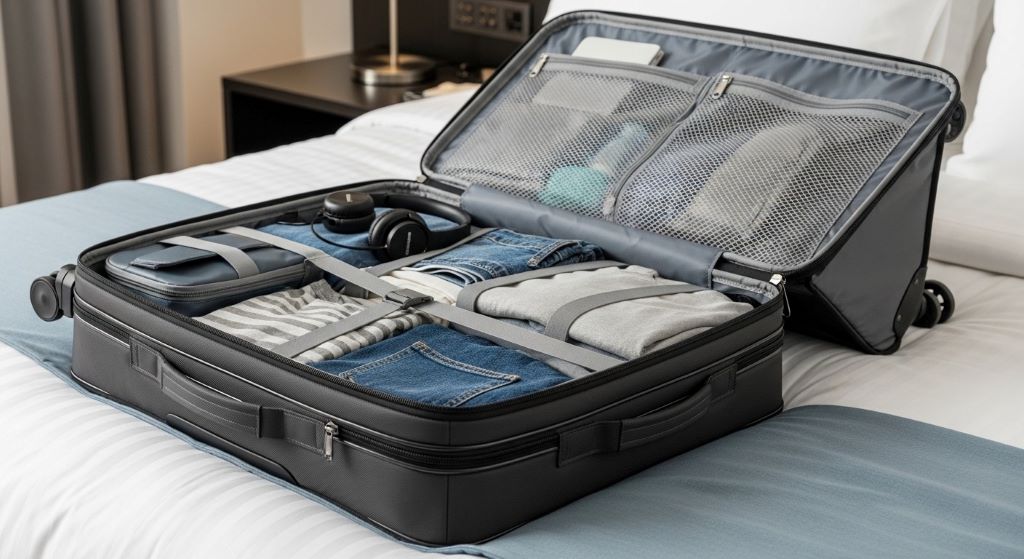
Smart internal design maximizes packing efficiency and keeps belongings organized throughout your journey. Look for luggage with dividers, compression straps, and multiple compartments.
Compression straps prevent clothes from shifting during transit. They keep everything neat and minimize wrinkles. Some designs include cross straps on both sides of the case, providing excellent organization for longer trips.
Built-in garment bags or suit compartments help business travelers maintain professional appearances. These features allow you to pack formal wear without excessive wrinkling. Additionally, shoe compartments keep dirty footwear separated from clean clothing.
Zippered mesh pockets work wonderfully for organizing smaller items like toiletries, electronics, or undergarments. Clear mesh allows you to see contents without unpacking everything. This convenience proves valuable when living out of your suitcase for extended periods.
Security Features
Protecting your belongings during long trips requires attention to security features. Built-in TSA-approved locks offer peace of mind while complying with airport security requirements. These special locks allow security personnel to inspect your bag without breaking the mechanism.
Quality zippers represent your first line of defense against theft. Look for sturdy, self-repairing zippers that resist forced entry. Some premium luggage includes concealed zippers or zip pulley guards that make unauthorized access more difficult.
However, remember that no luggage is completely theft-proof. Never pack irreplaceable valuables in checked bags. Keep important documents, medications, and expensive electronics in your carry-on luggage instead.
Cable locks provide additional security when storing your luggage in hostels or hotel rooms. Many bags include loops or attachments designed specifically for securing your suitcase to fixed objects.
Weight Considerations
Airlines impose strict weight limits on checked baggage, typically around 50 pounds for economy class. Your empty suitcase’s weight directly affects how much you can pack. Therefore, choosing lightweight luggage maximizes your packing capacity.
Modern materials allow manufacturers to create surprisingly light yet durable luggage. Some large suitcases weigh as little as eight pounds when empty. This lightweight construction gives you more allowance for clothing and souvenirs.
However, extremely lightweight luggage sometimes sacrifices durability. Find a balance between weight and construction quality. A slightly heavier bag that lasts for years proves more economical than replacing cheap lightweight luggage after every trip.
Weighing your packed bag before leaving home prevents unpleasant surprises at check-in. Portable luggage scales cost less than twenty dollars and eliminate guesswork. They’re invaluable tools for frequent travelers.
Brand Reputation and Warranty
Investing in reputable brands often pays dividends through superior quality and customer service. Established luggage manufacturers typically offer comprehensive warranties covering manufacturing defects.
Read warranty terms carefully before purchasing. Some companies offer lifetime guarantees, while others provide coverage for specific periods. Understanding what’s covered helps you make informed decisions.
Customer reviews provide valuable insights into real-world performance. Look for patterns in feedback rather than focusing on individual complaints. Consistent praise or criticism across many reviews indicates accurate product representation.
Premium brands usually cost more upfront but often last significantly longer than budget alternatives. Calculate the cost per trip rather than just the initial price. A $300 suitcase lasting ten years costs less per journey than a $100 bag requiring replacement every two years.
Testing Before Extended Travel
Once you’ve purchased luggage, test it before your big trip. Pack it fully and wheel it around your home or neighborhood. This trial run reveals any issues with wheels, handles, or weight distribution.
Check all zippers thoroughly. Open and close them multiple times while the bag is full. Ensure they glide smoothly without snagging or sticking.
Practice lifting the packed bag to verify you can manage its weight. If you struggle lifting it when full, consider redistributing items or choosing a lighter packing strategy.
Conclusion
Selecting the best luggage for long trips requires careful evaluation of multiple factors. Start by understanding your specific travel needs and typical destinations. Consider size carefully using a checked luggage size guide to ensure compliance with airline restrictions while maximizing packing space. An expandable suitcase offers valuable flexibility for shopping and souvenirs during extended vacations.
Material choice affects durability and weight, with both hardshell and softshell options offering distinct advantages. Quality wheels and handles dramatically impact comfort during travel. Internal organization features keep belongings tidy throughout long journeys. Security features protect valuables, though irreplaceable items belong in carry-on bags.
Weight matters significantly given airline restrictions. Balance lightweight construction with durability for best results. Invest in reputable brands with solid warranties. Finally, test your luggage before departure to ensure it meets your expectations. With thoughtful selection, your luggage becomes a reliable travel companion for countless adventures.
Frequently Asked Questions
What size luggage is best for a three-week vacation?
For trips lasting three weeks, a large checked suitcase measuring 28 to 30 inches works well for most travelers. This size provides sufficient space for clothing and supplies while remaining within airline dimension limits. Consider your destination’s climate and activities when determining capacity needs. Warmer destinations require less bulky clothing, allowing smaller luggage.
Are hard or soft suitcases better for international travel?
Both types work well for international travel, depending on your priorities. Hardshell luggage protects fragile items better and resists water effectively. Soft luggage weighs less, offers external pockets, and provides more flexibility when packing. Consider what you typically pack and whether protection or weight matters more for your travel style.
How much should I spend on quality luggage?
Quality luggage typically costs between $150 and $400 for checked bags. Higher prices generally reflect better materials, construction, and warranties. However, spending more doesn’t guarantee satisfaction. Focus on features you need rather than price alone. Well-made luggage lasts many years, making it a worthwhile investment for frequent travelers.
Can I use expandable luggage on all airlines?
Yes, expandable luggage works with all airlines as long as the expanded dimensions remain within size limits. Always check your specific airline’s restrictions before traveling. Remember that expanding your bag increases volume but doesn’t change weight limits. Weigh your luggage before departure to avoid excess baggage fees at the airport.
How do I maintain my luggage for long-term use?
Clean your luggage after each trip using appropriate methods for its material. Store it in a dry location away from direct sunlight. Keep zippers lubricated with zipper lubricant or wax. Check wheels periodically for damage or debris. Address small repairs immediately before they worsen. Following these practices extends your luggage’s lifespan significantly.
Related Topics:
What to Do on a Road Trip: Boredom-Busting Ideas for Next Adventure
Travel the Picturesque Cotswolds with Traditional Camper Van Hire Gloucestershire
About Author
