Imagine juggling grocery bags, chasing a curious toddler, and soothing a fussy baby all at once. Many parents face this daily challenge. However, a simple tool changes everything. A baby carrier with hip seat offers sturdy support for your little one’s bottom while distributing weight evenly across your body.
This design blends the closeness of traditional babywearing with extra comfort for longer holds. For instance, options like the Momcozy hip seat baby carrier provide excellent baby carrier seat support that parents rave about for everyday ease.
Experts back this up too. The International Hip Dysplasia Institute notes that proper positioning in carriers promotes healthy hip development. Additionally, a classic 1986 study in Pediatrics found that increased carrying reduced infant crying by up to 43% overall.
These tools keep babies close and calm while freeing your hands.
What Is a Baby Carrier with Hip Seat?
Parents often seek versatile gear as babies grow heavier and more active. A baby carrier with hip seat steps in here perfectly.
This carrier features a wide, padded waistband with a built-in shelf-like seat. Your child sits securely on it, much like perching on your hip naturally. However, the structured design prevents strain on your body.
Many models allow multiple positions: front-facing in, outward, hip carry, or even back carry for older kids.
Moreover, toddler hip seat carriers shine for children who want up-and-down freedom. The seat enables quick transitions without full buckling each time.
In contrast, a baby waist carrier focuses more on waist support for shorter holds. Both styles prioritize ergonomics, but hip seat versions excel for toddlers exploring the world while staying close.
Parents appreciate how these carriers evolve with their child. They start as newborn supports and extend to preschooler ages in some cases.
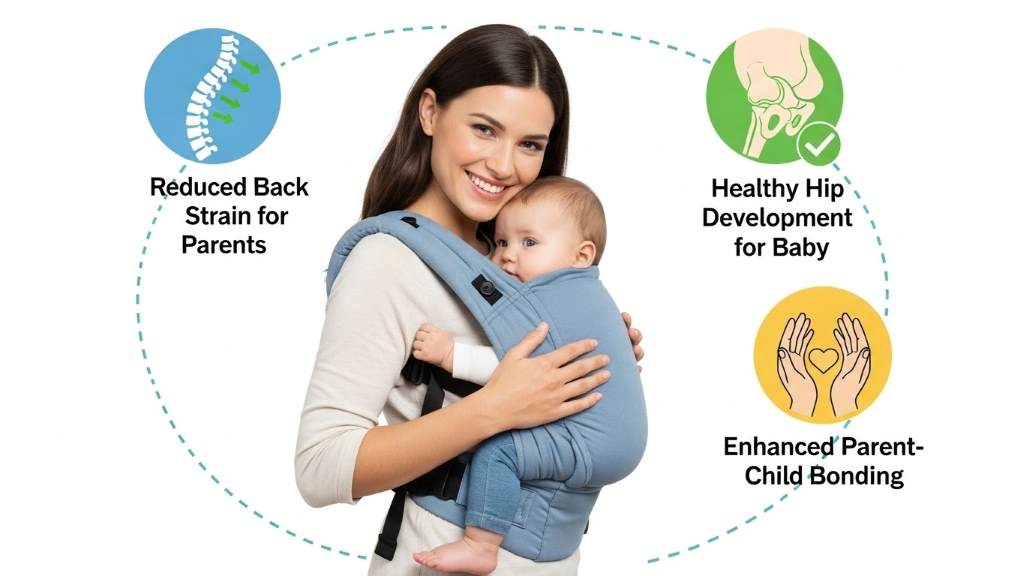
Key Benefits of Using a Baby Carrier with Hip Seat
Parents and babies both gain from this clever design. Research highlights physical, emotional, and practical advantages.
First, these carriers promote healthy hip positioning. The seat encourages the recommended “M” shape, with knees higher than the bottom and thighs supported.
The International Hip Dysplasia Institute acknowledges ergonomic carriers that maintain this spread-squat position as hip-healthy.
Next, weight distribution stands out. Traditional hip holding tilts your posture and strains one side. A hip seat shifts the load to your pelvis and core evenly.
This reduces back, shoulder, and arm fatigue. Many parents report carrying longer without discomfort.
Emotional benefits matter too. Close contact boosts bonding through skin-to-skin-like proximity.
Studies show babywearing increases oxytocin, fostering secure attachment. Carried babies often cry less and feel more secure.
Practically, hands-free carrying helps multitask. You cook, shop, or play with siblings while keeping baby content.
For active toddlers, the toddler hip seat carrier allows quick ups and downs. This supports independence without constant arm holding.
Finally, upright positioning aids digestion and reduces reflux. Babies observe the world better, stimulating development.
- Enhances parent-child bonding through constant closeness
- Supports healthy hip and spine development
- Distributes weight for reduced parental strain
- Reduces infant crying and promotes calmness
- Allows hands-free multitasking
- Facilitates quick transitions for curious toddlers
These perks make hip seat carriers a favorite for busy families.
Safety Considerations for Baby Carriers with Hip Seats
Safety always comes first when choosing baby gear. Hip seat carriers prove safe when used correctly, but guidelines matter.
The International Hip Dysplasia Institute emphasizes wide-base support for thighs. This avoids dangling legs that stress hips.
Always opt for designs promoting the “M” position. Narrow seats risk unhealthy positioning if used prolonged.
Age and weight limits guide proper use. Most hip seats suit babies from 6 months, once head control strengthens, up to 45 pounds.
Newer models include newborn inserts for earlier starts.
Airway safety remains crucial. Keep baby’s face visible and chin off chest. Follow T.I.C.K.S. rules: Tight, In view, Close enough to kiss, Keep chin off chest, Supported back.
Moreover, limit extended wear. These carriers work best for shorter periods or active days. Alternate with floor time for balanced development.
Inspect regularly for wear. Secure buckles and adjust straps snugly.
However, no carrier causes hip dysplasia outright. Proper use supports natural development, per experts.
Studies comparing carriers to treatment devices like Pavlik harnesses show similar beneficial hip positions in ergonomic models.
Parents feel confident knowing these guidelines.
Essential Safety Tips
- Choose IHDI-acknowledged hip-healthy models
- Ensure full thigh support to knees
- Monitor for signs of discomfort in baby
- Practice putting on and taking off at home first
- Avoid sleeping in the carrier unsupervised
Following these keeps everyone safe and happy.
Related:
How to Convert a Baby Rocker Into a Stationary Seat: A Complete Guide for Parents
How Much to Spend on a Baby Shower Gift
How to Choose the Best Baby Carrier with Hip Seat: Buying Tips
Finding the right fit feels overwhelming with so many options. However, key factors narrow choices quickly.
Prioritize ergonomics first. Seek wide, padded seats that support thighs fully. Adjustable waistbands accommodate different body types.
Materials matter too. Breathable fabrics like mesh keep you cool. Machine-washable options simplify cleaning.
Versatility adds value. Look for multiple carry positions, including hip and front options.
Some convert to full structured carriers.
Consider ease of use. Quick buckles and intuitive designs save time. Solo on-and-off proves essential for many parents.
Storage pockets hold essentials conveniently. Detachable parts offer flexibility.
Fit your lifestyle. Active parents need sturdy, lightweight models. Urban dwellers appreciate compact folding.
Try before buying if possible. Many stores offer demos. Check return policies for online purchases.
Read reviews from similar-sized parents and babies.
Finally, match to your child’s stage. Newborn-ready versions differ from toddler-focused ones.
- Wide waistband for even weight distribution
- Padded, structured hip seat
- Adjustable straps for custom fit
- Breathable, durable materials
- Multiple carrying positions
- Easy-to-clean design
These features ensure long-term satisfaction.
Common Mistakes to Avoid
Even great carriers disappoint with misuse. Parents often overlook fit adjustments.
Straps left loose compromise support. Always tighten for snug security.
Another issue involves ignoring age guidelines. Using hip seats too early risks poor positioning.
Conversely, overloading beyond weight limits strains fabrics.
Over-reliance on one tool limits variety. Balance with tummy time and free movement.
Forgetting weather needs leads to discomfort. Layer appropriately or choose seasonal fabrics.
Skipping practice causes fumbling moments. Master adjustments beforehand.
Finally, neglecting self-care matters. Listen to your body and switch sides.
Avoiding these keeps experiences positive.
Conclusion
Baby carriers with hip seats transform daily parenting. They blend comfort, closeness, and convenience seamlessly.
From supporting healthy development to easing physical strain, benefits touch every aspect of family life.
Safety guidelines and smart buying choices ensure positive outcomes.
Many parents discover these carriers become indispensable tools.
Explore options that fit your needs. Start with models offering strong baby carrier seat support for reliable comfort.
Your back—and your baby—will thank you.
Ready to try one? Research reputable brands and find your perfect match today.
FAQs
What age is best for starting a hip seat carrier?
Most suit babies from 6 months with good head control. Some include inserts for younger infants. Always check manufacturer guidelines.
Are hip seat carriers better than traditional slings?
Both offer benefits. Hip seats excel for quick toddler access and back relief. Slings provide softer, closer holds for newborns.
Can dads use baby carriers with hip seats comfortably?
Absolutely. Adjustable designs fit various body types. Many fathers love the even weight distribution.
How long can I wear my baby in a hip seat carrier?
Use for shorter outings or active periods. Alternate positions and allow floor time. Follow your comfort and baby’s cues.
Do hip seat carriers help with back pain?
Yes, many parents report relief. Proper weight distribution reduces strain compared to arm holding.
Ref:
- International Hip Dysplasia Institute – Baby Carriers & Other Equipment: https://hipdysplasia.org/baby-carriers-other-equipment/
- PubMed – Exploring infant hip position in baby carriers: https://pubmed.ncbi.nlm.nih.gov/34566253/
- Pediatrics – Effects of increased carrying on infant crying (1986 study reference): https://pubmed.ncbi.nlm.nih.gov/3940352/
- PMC – Benefits of babywearing: https://pmc.ncbi.nlm.nih.gov/articles/PMC8462515/
About Author
